Gujarati New Year, popularly known as Bestu Varas, will be celebrated on Tuesday, November 10, 2026, marking the beginning of Vikram Samvat 2083 in the Gujarati calendar. The festival is observed with prayers, visits to temples, family gatherings and traditional rituals that welcome prosperity, happiness and new beginnings.
The occasion follows Diwali and holds special significance for Gujarati communities in India and abroad. Families celebrate the start of the new year by seeking divine blessings, greeting elders, exchanging sweets and renewing personal and business relationships.
This year, the festival falls two days after Diwali, which will be celebrated on November 8. The difference in dates is linked to the Hindu lunar calendar and the timing of the Pratipada tithi, the first day of the bright lunar fortnight.
Gujarati New Year 2026: Date and Calendar Details
Bestu Varas marks the beginning of the Gujarati calendar year, which follows the Kartikadi tradition of the Vikram Samvat calendar.
The festival is associated with Kartik Shukla Pratipada, also known in Gujarati as Kartak Sud Ekam. According to the sunrise-based calendar convention followed for the observance, Gujarati New Year will fall on November 10 this year.
Here are the important details for Gujarati New Year 2026:
- Festival: Gujarati New Year or Bestu Varas
- Date: Tuesday, November 10, 2026
- Gujarati calendar year: Vikram Samvat 2083
- Hindu month: Kartik
- Tithi: Kartik Shukla Pratipada
- Pratipada begins: November 9, around 12:30 PM
- Pratipada ends: November 10, around 2:00 PM
Tithi timings may vary slightly across Panchang sources and locations. People planning religious ceremonies should consult a local Panchang for location-specific timings.
Why Is Gujarati New Year Celebrated on November 10?
Gujarati New Year usually follows Diwali, but the exact date depends on the lunar tithi and the traditional rules used to determine the beginning of the new year.
In 2026, Amavasya, the new moon day associated with Diwali, continues through the morning of November 9. The Pratipada tithi begins around midday that day and remains active at sunrise on November 10.
Under the sunrise-based convention, November 10 is therefore observed as Bestu Varas. The date also coincides with Govardhan Puja in 2026, bringing together two important occasions associated with the post-Diwali festive period.
Bestu Varas Rituals and Traditions
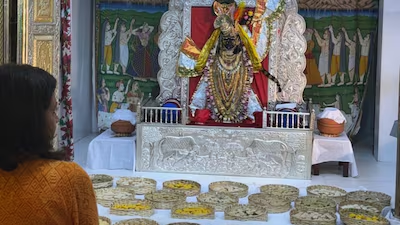
Gujarati New Year begins with religious observances and family traditions. Many people wake up early, wear new clothes and visit temples to pray for good health, success and prosperity in the coming year.
Families exchange sweets, visit relatives and seek blessings from elders. Traditional greetings such as “Saal Mubarak” and “Nutan Varshabhinandan” are widely used to wish others a happy and prosperous new year.
Homes may be decorated with rangoli, flowers and lamps to create a festive atmosphere. The emphasis is on welcoming the new year with positivity, gratitude and goodwill.
Significance of Chopda Pujan
Chopda Pujan is an important tradition among Gujarati business communities. Traders and business owners worship their account books and financial records, seeking blessings for prosperity and success in the year ahead.
The ritual is traditionally performed during Diwali celebrations, particularly during Lakshmi Puja. Businesses may then reopen after the festive break on Labh Pancham, which falls on Saturday, November 14, in 2026.
Religious Significance of Gujarati New Year
Bestu Varas represents renewal, hope and the opportunity to begin another year with positive intentions. Religious observances reflect the importance of gratitude, family relationships and prosperity in Gujarati culture.
The festival also strengthens community bonds as people visit friends and relatives, exchange greetings and participate in traditional celebrations.
As Gujarati communities welcome Vikram Samvat 2083, Bestu Varas offers an opportunity to reflect on the year gone by and look forward to fresh opportunities, happiness and success.