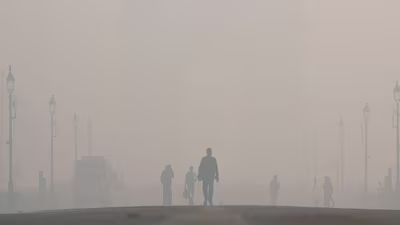
Delhi’s air pollution problem continues to raise serious concerns as the national capital struggles with unhealthy air quality following Diwali. Although the contribution of agricultural stubble burning has fluctuated, experts point to several other factors that can keep pollution levels high, including vehicle emissions, firecracker smoke, construction dust and unfavourable weather conditions.
The situation highlights the complexity of Delhi-NCR’s seasonal pollution crisis. While stubble burning in neighbouring states is often blamed for the thick winter smog, the city’s air quality is influenced by a combination of local emissions, pollution transported from surrounding regions and atmospheric conditions that prevent pollutants from dispersing.
Delhi’s Air Quality Under Pressure After Diwali
Delhi typically experiences a deterioration in air quality during the transition from autumn to winter. The problem becomes particularly acute around Diwali, when firecracker emissions add to the pollution already present in the atmosphere.
Following the festival, the national capital witnessed a sharp increase in pollution, with several monitoring stations recording air quality in the severe category. The accumulation of fine particulate matter, especially PM2.5, remains a major concern because these tiny particles can penetrate deep into the respiratory system.
The impact is not limited to the days immediately following Diwali. Low wind speeds, cooler temperatures and limited atmospheric mixing can allow pollutants to remain concentrated close to the ground, prolonging the period of poor air quality.
Stubble Burning Is Only One Part of the Problem
Crop-residue burning in Punjab, Haryana and other neighbouring agricultural regions has long been associated with Delhi’s winter pollution. Smoke from farm fires can travel towards the capital, adding to the concentration of airborne particles.
However, experts caution against treating stubble burning as the sole explanation for the city’s deteriorating air quality. Its contribution varies from day to day, depending on the number and location of farm fires, wind direction and the movement of air across the region.
Even when agricultural-fire emissions decline, Delhi can continue to experience severe pollution because of emissions generated within the city and across the wider National Capital Region.
This makes it important to examine the contribution of different pollution sources rather than relying on a single explanation for every episode of poor air quality.
Vehicle Emissions and Weather Conditions Add to the Smog
Vehicular pollution remains one of the major contributors to Delhi’s air quality challenges. Heavy traffic, congestion and emissions from diesel-powered vehicles release pollutants that can accumulate when weather conditions are unfavourable.
Construction activity, road dust, industrial emissions and waste burning also contribute to the overall pollution burden. These sources operate throughout the year, making it difficult to achieve sustained improvements through short-term restrictions alone.
Weather plays an equally important role. When wind speeds are low, pollutants disperse more slowly, allowing harmful particles to build up near the surface. Changes in wind direction can also carry pollution from surrounding districts into the capital.
Consequently, a temporary improvement in the Air Quality Index (AQI) does not necessarily mean that the underlying pollution problem has been resolved.
Experts Stress the Need for Long-Term Measures
Environmental experts have repeatedly highlighted the need for a comprehensive strategy that addresses pollution sources across Delhi-NCR and neighbouring states. Measures aimed at reducing farm fires remain important, but they need to be supported by stricter controls on transport emissions, construction dust and industrial pollution.
Better public transport, cleaner fuels, effective waste management and improved enforcement of existing regulations could help reduce the city's everyday emissions. Authorities also need to strengthen coordination between Delhi and neighbouring states because air pollution does not remain confined within administrative boundaries.
Accurate monitoring is another essential component. Reliable readings from air-quality stations can help officials identify pollution hotspots, assess the effectiveness of restrictions and make informed decisions about emergency measures.
What Delhi Residents Should Know
Poor air quality can cause coughing, throat irritation, breathing difficulties and eye discomfort. People with asthma or other respiratory conditions may experience worsening symptoms, while children, older adults and those with existing health problems can be particularly vulnerable.
Residents can reduce exposure by limiting strenuous outdoor activity when pollution levels are high, keeping windows closed during periods of heavy smog and following official health advisories. Anyone experiencing significant breathing difficulty should seek medical attention.
Delhi’s post-Diwali pollution situation underlines the need to look beyond stubble burning when examining the causes of toxic air. Agricultural fires remain a contributing factor, but vehicle emissions, firecrackers, dust and weather conditions can collectively sustain dangerous pollution levels.
A lasting improvement will depend on coordinated action throughout the year rather than temporary interventions introduced only when the AQI reaches alarming levels.