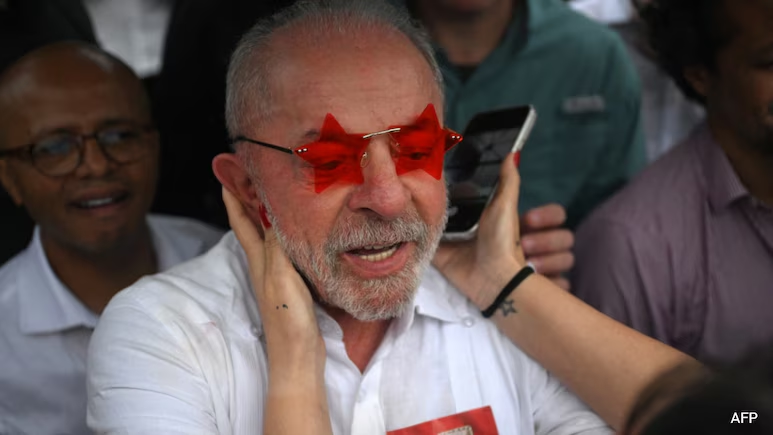
Luiz Inácio Lula da Silva has won a fourth, non-consecutive term as Brazil’s president, defeating conservative challenger Flávio Bolsonaro in a closely contested presidential runoff on October 25, 2026. The victory gives the veteran left-wing leader another mandate to govern Latin America’s largest economy and signals that Brazil will continue under his political leadership despite growing domestic divisions and tensions with US President Donald Trump.
According to Brazil’s Superior Electoral Court, Lula secured 51.79% of the valid votes, while Bolsonaro received 48.21%. The result confirmed Lula’s return to office after a fiercely fought campaign that placed economic concerns, social policies and Brazil’s international relations at the centre of the political debate.
The outcome also represents a setback for Bolsonaro, whose campaign favoured closer ties with Washington under Trump. Lula, who has frequently criticised the US president’s approach to international trade and regional influence, now faces the challenge of translating his electoral victory into effective governance.
Lula Secures Another Presidential Mandate
Lula, who turns 81 on October 27, has become the first Brazilian president to win four presidential terms. He previously governed the country from 2003 to 2010 before returning to office in January 2023 following his victory in the 2022 election.
His latest win came after a competitive campaign in which the incumbent faced criticism over rising living costs, corruption controversies surrounding his political party and concerns about the government's economic direction.
The president's campaign gained momentum during the final stage of the election, using social media outreach and public demonstrations to mobilise supporters. His message focused on maintaining social programmes, protecting workers' interests and continuing government investment in development.
The result ensures that the Workers' Party, known as the PT, will retain the presidency for another term, although Lula will need to navigate a politically divided country.
Flávio Bolsonaro's Challenge Falls Short
Flávio Bolsonaro, a senator and the son of former president Jair Bolsonaro, emerged as the principal challenger to Lula. His campaign attracted conservative voters and those seeking a change in the country's political direction.
The younger Bolsonaro advocated stronger relations with the United States and sought to position himself as an alternative to Lula's economic and social agenda.
However, he fell short of securing the presidency. His defeat also limits the immediate political comeback of the Bolsonaro family, which remains a significant force within Brazil's conservative movement.
The result reflects the continued competition between left-wing and right-wing political constituencies in the country, with neither side commanding universal support.
Tensions With Donald Trump Remain in Focus
Lula's victory has international implications, particularly for Brazil's relationship with the United States. The Brazilian leader has defended national sovereignty and opposed measures he considers excessive foreign pressure on his country's economic policies.
Trade relations have been a major point of friction between the two governments, particularly amid tariff disputes and disagreements over Washington's approach to Latin America.
Lula's re-election suggests that Brazil will continue pursuing an independent foreign policy while maintaining diplomatic and commercial relationships with multiple international partners. His government is expected to face continued negotiations over trade, investment and regional cooperation.
The result also leaves Brazil and Mexico under left-of-centre leadership, at a time when several other countries in Latin America have moved towards conservative administrations.
Economic Pressures and Political Divisions Await Lula
Despite the electoral victory, Lula faces considerable challenges at home. Household expenses, employment opportunities, public services and economic growth remain important concerns for Brazilian voters.
His government will also have to work with a Congress in which conservative forces retain substantial influence, potentially complicating efforts to advance legislation and implement policy priorities.
Lula has pledged to continue social programmes and pursue economic development while defending Brazil's independence in international affairs.
The election has settled the immediate contest for the presidency, but the coming term will test his ability to address domestic concerns, manage political opposition and maintain Brazil's position in an increasingly complicated global environment.