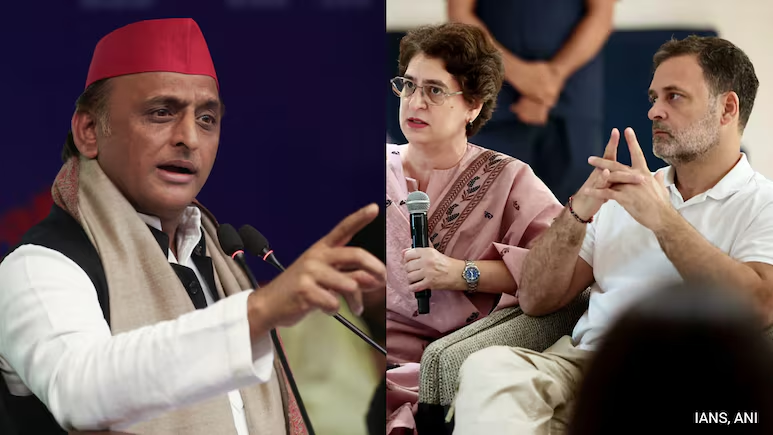
The Congress has initiated seat-sharing discussions with the Samajwadi Party (SP) ahead of the 2027 Uttar Pradesh Assembly elections, seeking a significant share of constituencies in a proposed alliance. The negotiations come as both parties consider their electoral performance, organisational strength and prospects of working together in the state.
Congress leaders have submitted an initial list of approximately 175 to 200 Assembly constituencies where the party believes it could perform effectively as part of an alliance. However, the Samajwadi Party has expressed reservations about allocating such a large number of seats, maintaining that candidate winnability should determine the final arrangement.
Congress Begins Seat-Sharing Negotiations
Rajendra Pal Gautam, the Congress's Uttar Pradesh in-charge, confirmed that the party had shared its preliminary list with Samajwadi Party leaders. He indicated that the two parties would hold further discussions to work out the details of the proposed seat-sharing arrangement.
Uttar Pradesh has 403 Assembly constituencies, making the distribution of seats a significant issue for both parties. While Congress is seeking a meaningful role in the alliance, the final number of constituencies it will contest remains undecided.
The initial list is part of the negotiation process and does not represent a final agreement. Both parties are expected to assess their respective strengths before reaching a settlement.
Samajwadi Party Prioritises Winnability
The Samajwadi Party has questioned whether Congress has sufficient electoral strength across the state to justify its demand for such a substantial share of seats.
According to party leaders, the selection of constituencies should depend on candidates' chances of winning rather than the number of seats an alliance partner requests. The SP leadership has emphasised the importance of local political conditions, organisational networks and candidate credibility.
The disagreement reflects a broader challenge in opposition alliances: balancing the ambitions of individual parties with the objective of presenting a coordinated electoral challenge.
Although the two parties have differences over seat allocation, their leaders have continued to express support for cooperation ahead of the next Assembly elections.
How Previous Election Results Influence the Talks
The parties' electoral performances in recent elections are central to the negotiations.
In the 2022 Uttar Pradesh Assembly elections, Congress contested independently and won just two seats, compared with seven in 2017. The result highlighted the party's limited representation in the state legislature.
The political picture changed during the 2024 Lok Sabha elections. Congress won six parliamentary seats in Uttar Pradesh, while the Samajwadi Party secured 37. The BJP won 33 seats in the state.
These results have strengthened Congress's argument that cooperation with the SP can improve its electoral prospects. The party believes the alliance's performance in the parliamentary elections provides a basis for negotiating a larger role in the 2027 Assembly contest.
However, parliamentary and Assembly elections involve different constituencies, candidates and local political considerations. The parties must therefore assess individual Assembly seats rather than rely exclusively on statewide or parliamentary results.
Leadership Changes and Alliance Coordination
Organisational changes within the Uttar Pradesh Congress are also relevant to the discussions. Aradhana Misra Mona replaced Ajay Rai as the party's state unit chief, with the leadership transition taking place ahead of the Assembly elections.
Congress leaders are hopeful that continued discussions will produce a mutually acceptable arrangement. The party has also categorised constituencies according to its internal assessment of electoral prospects, which could help structure negotiations.
Samajwadi Party chief Akhilesh Yadav has reiterated that the broader objective is to strengthen the opposition alliance. His statements indicate that cooperation remains an important consideration, even as the parties negotiate their respective roles.
What Lies Ahead for the 2027 Elections?
The immediate challenge is to agree on a seat-sharing formula that reflects each party's organisational presence and electoral ambitions. The discussions will also need to address constituencies where both parties believe they have viable candidates.
The BJP-led National Democratic Alliance, smaller regional allies and the Bahujan Samaj Party will remain important elements of Uttar Pradesh's political landscape.
No final seat-sharing agreement between Congress and the Samajwadi Party has been announced. Further negotiations are expected to determine how many constituencies each party will contest and how they will coordinate their campaigns.
The outcome of these discussions will establish the framework for their alliance ahead of the 2027 Uttar Pradesh Assembly elections.