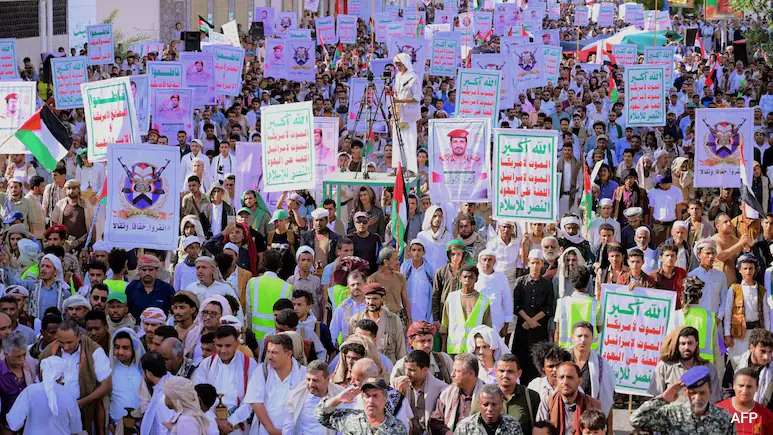
Yemen's Houthi movement has launched a media campaign targeting Saudi Arabia by invoking documents linked to the late American financier Jeffrey Epstein. The campaign follows Saudi accusations that the Houthis attempted to target Mecca with drones and missiles, allegations the Yemeni group has denied.
The dispute has added a new dimension to the ongoing conflict between the Houthis and Saudi Arabia, with political messaging, social media content and religious symbolism becoming important elements of the confrontation.
According to reports published on October 23, 2026, the Houthis have been using references to Epstein-related documents to question Saudi Arabia's conduct and challenge its claims to be protecting Islam's holiest sites.
Epstein Documents Become Part of the Political Dispute
The Houthi campaign focuses on documents released by the United States Department of Justice that reportedly describe connections between Epstein and individuals associated with Saudi royal circles.
Among the reported details are claims that associates of the Saudi royal court sent Epstein decorative tapestries featuring coverings associated with the Kaaba, the sacred structure at the centre of the Grand Mosque in Mecca.
The Houthis have incorporated these reports into their political messaging, arguing that the allegations undermine Saudi Arabia's standing as the guardian of Islam's most sacred places.
Houthi political leader Mahdi al-Mashat used the issue to challenge Saudi accusations concerning Mecca. His remarks were subsequently circulated through the group's media channels.
However, references to individuals or alleged associations in released documents do not, by themselves, establish criminal wrongdoing. The broader political claims being made by the Houthis also require independent assessment.
Disagreement Over Alleged Attacks on Mecca
In September 2026, Saudi Arabia accused the Houthis of attempting to target Mecca with a drone. Saudi authorities said their air defences intercepted the aircraft before it entered the city's restricted airspace.
The allegations prompted strong reactions because Mecca is Islam's holiest city and attracts millions of Muslim pilgrims annually.
The Houthis rejected the accusation, describing it as false. The two sides have continued to offer conflicting accounts of the incident, and their public statements reflect the wider hostility between them.
Saudi Arabia has supported Yemen's internationally recognised government in its conflict with the Houthis, who control the capital, Sanaa, and substantial parts of the country.
The dispute over Mecca has therefore become part of a much broader struggle involving territorial control, regional influence and competing claims to political legitimacy.
Social Media and Influencers Amplify the Message
The Houthi campaign extends beyond official political statements. It reportedly includes videos, speeches, songs and social media posts designed to reach audiences inside Yemen and across the wider Arab world.
Yemeni comedian Mustafa Al-Momari has reportedly addressed the controversy in online content, while musicians have incorporated the allegations into songs.
Houthi leader Abdul-Malik al-Houthi has also referred to Epstein-related documents in speeches, presenting them as evidence of what he describes as wider networks of influence among powerful international figures.
The campaign has attracted attention from online commentators who regularly discuss the Epstein documents and allegations concerning political elites. Such engagement can increase the reach of the messaging, although online popularity does not establish the accuracy of the claims being circulated.
Saudi Arabia Has Not Publicly Responded to the Latest Claims
Saudi officials had not publicly responded to the specific Houthi allegations concerning the reported tapestries and their connection to Epstein at the time of the latest reports.
The absence of a public response does not establish whether the claims are accurate. The reported contents of the documents, the identities and roles of the individuals involved, and the political interpretations being attached to them should be considered separately.
Meanwhile, the competing accusations over Mecca remain unresolved in the public record.
A Wider Information Battle Alongside the Conflict
The controversy illustrates how the conflict involving Saudi Arabia and the Houthis extends beyond military operations. Both political messaging and digital communications play a role in shaping public perceptions of the parties involved.
For the Houthis, references to Epstein and the Kaaba offer a way to challenge Saudi Arabia's religious and political standing. Saudi Arabia, meanwhile, has presented the alleged threat to Mecca as a matter of national and religious security.
The central issues remain disputed: Saudi Arabia's allegations concerning the attempted attack, the Houthis' denial and the interpretations attached to Epstein-related documents.
Further independently verified information would be needed to establish the details behind the competing claims. Until then, the episode remains an example of how a regional conflict can intersect with international controversies and online information campaigns.