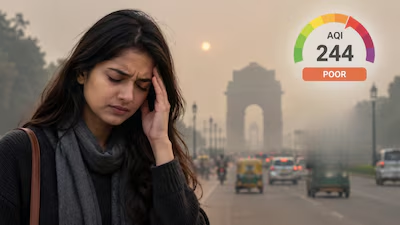
Air pollution in Delhi is raising fresh health concerns as the Air Quality Index (AQI) reaches 244, placing conditions in the very poor category under India's national air quality scale. Along with its impact on breathing and eye comfort, polluted air may also contribute to headaches and other symptoms that interfere with daily activities.
The situation highlights how poor air quality can affect health even when symptoms are not immediately obvious. People who spend long hours outdoors, commute through traffic-heavy areas or have existing respiratory conditions may need to take additional precautions during periods of elevated pollution.
Headaches can have several causes, including dehydration, stress, inadequate sleep and environmental exposure. Understanding the possible connection between air quality and discomfort can help people make informed decisions about their daily routines.
What Does an AQI of 244 Mean?
India's AQI system classifies readings between 201 and 300 as very poor. An AQI of 244 therefore indicates substantial pollution that can pose health risks, particularly for people who are sensitive to poor air quality.
The index reflects concentrations of pollutants in the air, including fine particulate matter known as PM2.5 and larger particles called PM10. Other monitored pollutants include nitrogen dioxide, ozone, sulphur dioxide and carbon monoxide.
PM2.5 is particularly concerning because these tiny particles can penetrate deep into the respiratory system. Depending on their composition and the duration of exposure, airborne pollutants can trigger inflammation and contribute to a range of health problems.
Delhi's air quality can change significantly with weather conditions, wind speed, traffic emissions, construction dust, industrial activity and seasonal pollution sources. An individual AQI reading represents conditions at a particular time and location rather than a complete picture of exposure throughout the day.
How Air Pollution May Contribute to Headaches
Air pollution does not cause every headache, but exposure to polluted air may trigger or worsen symptoms in some individuals.
Inflammation in the body: Exposure to airborne particles can promote inflammatory responses. Researchers have investigated how these processes may affect the nervous system and contribute to headache symptoms.
Oxidative stress: Certain pollutants can increase oxidative stress, which occurs when harmful reactive molecules overwhelm the body's protective mechanisms. This process may contribute to inflammation and other biological effects associated with pollution exposure.
Irritation and discomfort: Polluted air can irritate the eyes, nose and respiratory tract. For some people, this discomfort may occur alongside headaches, fatigue or a general feeling of being unwell.
Migraine triggers: Environmental changes can trigger migraines in susceptible individuals. Air pollution has been studied as a possible contributing factor, although the relationship varies and does not establish that every headache during a pollution episode is pollution-related.
Poor air quality may also coincide with dehydration, fatigue and disturbed sleep, which are independently associated with headaches.
Who May Be More Vulnerable?
Although anyone can experience discomfort during periods of heavy pollution, certain groups may face greater health risks. These include children, older adults, people with asthma or other respiratory conditions, and individuals with cardiovascular disease.
People who regularly experience migraines may also notice changes in their symptoms when environmental conditions deteriorate. However, headaches have many possible causes, so pollution should not automatically be considered the explanation.
A sudden, severe headache or one accompanied by confusion, fainting, weakness, vision changes or difficulty speaking requires urgent medical attention. Persistent or recurring headaches should also be discussed with a healthcare professional.
Practical Ways to Reduce Exposure to Polluted Air
When Delhi's AQI enters the very poor category, reducing exposure is an important precaution.
- Check air quality updates: Review local AQI readings before planning outdoor activities, especially during periods of heavy pollution.
- Limit strenuous outdoor exercise: Consider moving intense workouts indoors when pollution levels are elevated.
- Use a well-fitting N95 respirator: When outdoor exposure cannot be avoided, a properly fitted respirator can reduce inhalation of fine particles. It does not eliminate every pollutant or all health risks.
- Improve indoor air quality: Keep windows closed when outdoor pollution is high, where practical, and consider using an appropriately sized air purifier with an effective particle filter.
- Maintain hydration and regular sleep: Drinking enough water and maintaining a consistent sleep schedule can help address other common headache triggers, although these measures do not prevent pollution-related health effects.
Avoiding tobacco smoke and other indoor combustion sources can also help reduce unnecessary exposure, particularly when ventilation is limited.
Why Monitoring Delhi's Air Quality Matters
An AQI reading of 244 highlights the importance of taking air pollution seriously. Although headaches are not a specific indicator of exposure, recurring symptoms during periods of poor air quality may justify reviewing outdoor activities and consulting a healthcare professional.
Long-term exposure to air pollution is associated with significant respiratory and cardiovascular health risks. Reducing emissions from vehicles, construction, industry and other sources remains essential for improving public health.
For residents, monitoring daily air quality and taking sensible precautions can help limit exposure. At the same time, persistent headaches should not be dismissed as a consequence of pollution alone, because identifying their underlying cause is important for appropriate treatment