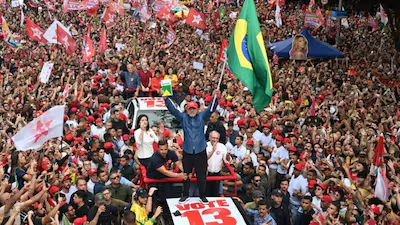
Brazil’s 2026 presidential election has highlighted the growing influence of messaging platforms in modern political campaigns. A WhatsApp mobilisation network known as “Lula’s Army” expanded rapidly during the final weeks of the contest, helping supporters of President Luiz Inácio Lula da Silva coordinate their activities and circulate campaign messages on a massive scale.
The network, organised by congressman André Janones, became a prominent part of Lula’s effort to recover from a difficult first round and defeat right-wing challenger Flávio Bolsonaro in the presidential runoff.
From a Small Channel to Millions of Supporters
Lula’s Army grew from approximately 60,000 followers after the first round of voting to nearly 11 million subscribers by election day. The sharp increase reflected an intensive digital campaign designed to turn online support into coordinated action.
Janones encouraged supporters to join the channel, recruit friends and share campaign videos, hashtags and other political content. Messages frequently presented these activities as missions, giving participants clear tasks and a shared objective.
The strategy relied on the speed and reach of WhatsApp. Rather than depending entirely on conventional advertising or public speeches, organisers could distribute messages directly to a large audience and encourage supporters to circulate them across their own social networks.
This approach also helped bring together voters who might otherwise have remained dispersed across different online communities. Supporters could participate in the campaign by sharing information and amplifying its central messages, even without attending rallies or working directly with campaign officials.
A Different Approach to Political Communication
The digital mobilisation was accompanied by changes in how Lula presented himself to voters. His campaign increasingly used informal videos and more personal communication to make the president appear accessible and relatable.
Lula’s working-class background became an important element of this messaging. During a televised debate, Flávio Bolsonaro mocked Lula over the loss of a finger in a factory accident when he was young. Lula responded by recalling the circumstances of the injury and connecting his experience to the challenges faced by workers.
Supporters subsequently circulated related messages and used hashtags to reinforce the campaign’s response. The episode illustrated how a moment from a televised debate could quickly become material for a much wider online mobilisation effort.
The strategy also reflected the growing importance of short videos, memes and direct appeals in political communication. These formats can be shared rapidly and adapted by supporters, allowing campaign messages to reach audiences beyond those following official accounts.
Did WhatsApp Decide the Election?
Lula won the runoff after trailing Flávio Bolsonaro in the first round, but determining exactly how much the WhatsApp network contributed to the result remains difficult.
The election saw a substantial increase in participation between the two rounds, with millions of additional voters casting ballots. Analysts have pointed to the importance of voter mobilisation, campaign messaging and efforts to persuade people who had previously abstained from voting.
However, the size of a digital audience does not automatically demonstrate that its members changed their voting decisions. Subscribers may already support a candidate, and online engagement cannot be directly translated into votes without detailed evidence.
Researchers have described Lula’s Army as an important organisational tool that helped supporters act collectively. Nevertheless, the election outcome also depended on factors beyond WhatsApp, including the candidates’ public messages, political loyalties and broader campaign dynamics.
What the Campaign Means for Future Elections
The Brazilian contest demonstrates how messaging platforms can become central infrastructure for political organising. They allow campaigns to distribute content quickly, coordinate supporters and sustain engagement during critical periods.
At the same time, highly active digital networks can intensify political polarisation and accelerate the circulation of disputed claims. The effectiveness of such campaigns therefore raises questions about transparency, misinformation and the responsibilities of platforms during elections.
Lula’s Army offers a significant example of how digital mobilisation can support a political comeback. Its rapid expansion shows the potential reach of coordinated online campaigning, while the difficulty of measuring its direct electoral impact underlines an important distinction: millions of followers can amplify a campaign, but follower numbers alone cannot prove why voters ultimately chose a candidate.