US President Donald Trump has claimed that his public endorsement helped Israeli Prime Minister Benjamin Netanyahu perform better than expected in Israel’s closely contested parliamentary election. However, preliminary results indicate that neither Netanyahu’s political bloc nor the opposition has secured the majority needed to form a government independently.
Trump also said he would consider getting involved in efforts to establish a unity government, adding another dimension to the political negotiations following the vote.
Trump Credits His Endorsement for Netanyahu’s Performance
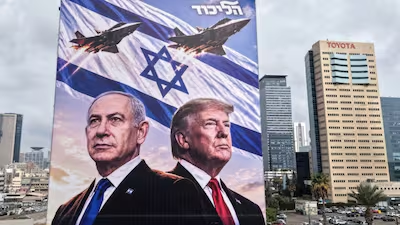
Speaking to reporters on October 28, Trump said he believed his endorsement had helped Netanyahu improve his electoral prospects. He also shared a social media post suggesting that the political momentum had shifted after he publicly backed the Israeli prime minister.
Trump had announced his support for Netanyahu on October 18, nine days before the election. He described the Israeli leader as a key partner for Washington, particularly on regional security issues involving Iran.
Netanyahu welcomed the endorsement and highlighted his relationship with the US president during the campaign. The two leaders have repeatedly presented their partnership as important to their shared security objectives.
Although Trump credited his intervention with helping Netanyahu, the extent of its influence on voter behaviour remains unclear. The final electoral outcome will depend on the official results and subsequent coalition negotiations.
Preliminary Results Leave Both Blocs Short of a Majority
Partial results released during the counting process showed Netanyahu’s bloc leading the opposition but falling short of an outright parliamentary majority.
In Israel’s 120-member Knesset, a government generally requires the support of at least 61 lawmakers to command a majority.
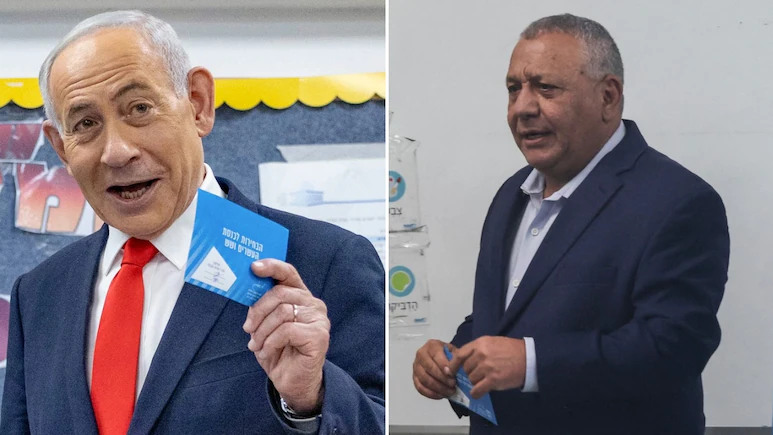
Figures available on October 28 showed Netanyahu’s bloc with approximately 53 seats, while the main opposition grouping led by Gadi Eisenkot had around 48. Arab-led parties collectively held a significant number of seats, potentially making them influential in negotiations over the next government.
The figures remained provisional as election officials continued counting ballots, including votes cast through special procedures by eligible voters such as military personnel.
The outcome left Netanyahu with a possible advantage in the initial government-formation process, but it did not guarantee that he could assemble a stable governing coalition.
Trump Says He Will Consider Unity Government Talks
Asked whether he would participate in efforts to form a unity government under Netanyahu, Trump said he would take a look at the possibility.
The comment came as Israeli political parties assessed their options following the inconclusive result. A unity government could potentially bring rival political groups together, but significant disagreements remain over leadership, security policy and the composition of any administration.
Several opposition leaders have ruled out joining a Netanyahu-led government, complicating the prospect of a broad coalition.
A US official separately indicated that Washington had not made a decision about intervening in the negotiations. Reports suggesting that the administration had already chosen a preferred coalition arrangement were described as premature.
Iran and Regional Security Remain Central Issues
Netanyahu’s relationship with Trump has been a prominent feature of discussions surrounding the election, particularly because of their shared emphasis on confronting threats from Iran.
Trump has argued that a close partnership with Netanyahu would help Washington pursue its regional security objectives. Netanyahu, meanwhile, has presented cooperation with the US president as important to Israel’s strategic interests.
However, the election has produced a complicated parliamentary landscape, and the next government’s policies will depend on negotiations among Israeli parties rather than external endorsements alone.
The result also reflects broader divisions within Israeli politics over national security, military-service exemptions, the government’s response to the October 7, 2023 attacks and the country’s international position.
Political Uncertainty Continues
With neither major bloc reaching the required majority in the preliminary count, coalition negotiations are expected to play a decisive role in determining Israel’s next government.
Netanyahu’s bloc emerged ahead in the initial figures, but opposition parties and Arab-led factions could influence the final political arithmetic. The possibility of a unity government remains uncertain, particularly given the reluctance of several opposition leaders to cooperate with the incumbent prime minister.
Trump’s endorsement has become part of the post-election debate, but its actual impact cannot be established from the preliminary results alone. The immediate focus remains on completing the count and determining whether Netanyahu or his rivals can assemble a governing majority.