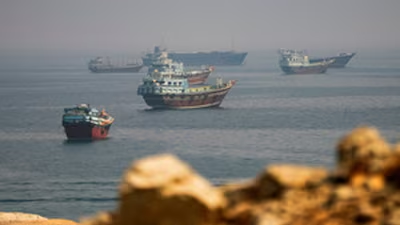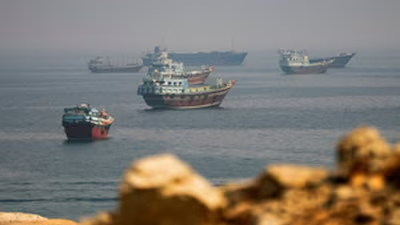
Iran has announced exemptions from Strait of Hormuz shipping restrictions for vessels from India, China, Qatar and Iraq, offering potential relief to countries heavily dependent on the strategic waterway. However, the arrangement comes with significant security, financial and geopolitical uncertainties that could limit its benefits.
A senior Iranian lawmaker, Amir Hayat Moqaddam, deputy chairman of the Iranian Parliament’s National Security and Foreign Policy Committee, said ships from the four countries could pass through the strait without facing Iran’s restrictions. He also claimed that US forces were not intercepting these vessels.
The announcement comes amid continuing tensions between Tehran and Washington, with disruptions to commercial shipping threatening energy supplies and international trade. Although the exemptions could help maintain the movement of essential goods, they do not guarantee safe passage or resolve the wider confrontation.
Why Iran Is Offering Special Treatment to Four Countries
Iran’s decision appears to be driven by a combination of economic needs and diplomatic calculations.
According to Moqaddam, India’s exemption is linked to Iran’s need for medicines, while China’s passage is intended to secure political support from Beijing. Iran is reportedly collecting transit fees from Indian and Chinese vessels, whereas Qatari ships are being allowed through without charges. The position on transit fees for Iraqi vessels remains unclear.
The arrangement could provide Iran with access to essential supplies and additional revenue while strengthening relationships with countries that have important economic or diplomatic links with Tehran.
For India, the development is particularly significant because the country relies heavily on imported energy. A substantial portion of its liquefied petroleum gas imports and a significant share of its liquefied natural gas supplies travel through the Strait of Hormuz. Any disruption to the route can affect shipping costs, energy security and domestic prices.
Four Major Risks Behind Iran’s Hormuz Exemptions
1. Commercial Ships Could Still Face Attacks
The first and most immediate concern is maritime security. Permission from Iran does not guarantee that vessels will avoid attacks, accidental targeting or misidentification during an active conflict.
Commercial shipping has faced repeated threats in the region since hostilities escalated. An exemption may reduce the risk of deliberate interference by Iranian forces, but it cannot eliminate dangers posed by other military actors, unidentified projectiles or rapidly changing conditions at sea.
Shipping companies must therefore assess whether a vessel can safely complete its journey rather than relying solely on a political announcement.
For India, the safety of seafarers is also a major concern, particularly after deadly incidents involving commercial vessels in the wider region.
uld Create Sanctions Complications
The second risk involves potential exposure to US sanctions.
Iran has indicated that Indian and Chinese vessels are paying transit fees. Depending on the parties involved, the nature of the transactions and the applicable restrictions, payments connected to Iranian entities could raise legal and compliance concerns for shipping operators, banks and insurers.
Companies may need to conduct additional checks before authorising payments or using particular routes. Even when a transaction is intended to facilitate legitimate commercial shipping, uncertainty over sanctions can complicate financial arrangements.
The precise legal consequences will depend on the circumstances of each transaction. Nevertheless, the possibility of sanctions-related complications could discourage some operators from using the exemption.
3. War-Risk Insurance and Shipping Costs May Remain High
The third challenge is the cost of operating in a conflict zone.
Shipowners generally rely on insurers to cover risks associated with war, attacks and damage to vessels. When tensions rise, insurers can increase premiums, impose additional conditions or restrict coverage.
Iran’s exemptions do not automatically change those assessments. Shipping companies could still face higher insurance costs, security expenses and freight charges even if their vessels are permitted to cross the strait.
These additional expenses may reduce the economic advantage of using the route and could eventually affect the prices paid by importers and consumers.
4. Iran Could Use Passage as Political Leverage
The fourth risk is the possibility that access to the strait becomes a tool of geopolitical pressure.
Iran’s decision to favour selected countries suggests that maritime access may be influenced by diplomatic relationships, economic exchanges and political support.
If relations between Tehran and any of the four countries deteriorate, the terms of the exemptions could potentially change. Shipping companies and governments would then face uncertainty over whether existing arrangements would remain in place.
This selective approach could also complicate relations with the United States and other Gulf countries, particularly if Washington views the exemptions as undermining its restrictions on Iranian ports.
The wider issue is whether the arrangement can operate consistently while the confrontation between Iran and the US remains unresolved.
What the Exemptions Mean for India
India could benefit from more predictable shipping through Hormuz, especially for energy supplies and other essential imports. The route remains strategically important to the country, and any improvement in maritime access could help reduce uncertainty for refiners, importers and logistics operators.
However, the exemption should not be interpreted as a complete guarantee that Indian vessels will pass without disruption. The security situation remains volatile, and the interaction between Iranian restrictions, US naval measures and commercial shipping arrangements is still uncertain.
The Indian government has consistently called for safe and unimpeded navigation through international waterways. Maintaining access to energy supplies while protecting Indian seafarers will remain a priority.
Will Iran’s Move Stabilise Oil Markets?
The immediate impact on global oil prices may be limited. While the exemptions could support some commercial traffic, they do not necessarily restore normal shipping throughout the Strait of Hormuz.
Markets are likely to remain sensitive to developments in the Iran-US confrontation, the safety of vessels and the prospects for a broader diplomatic settlement. A renewed escalation could quickly reverse any improvement in confidence.
For now, Iran’s offer provides a potential opening for selected countries, but the four major risks remain. The long-term benefit will depend on whether the exemptions translate into reliable, affordable and secure passage rather than remaining a fragile political arrangement.
For your next article, you can send another link and I’ll keep the same headline-and-full-article format.