Israel’s October 27, 2026, general election has become a major test of Prime Minister Benjamin Netanyahu’s leadership, with voters divided over the government’s response to the Hamas-led attacks of October 7, 2023, and the military campaigns that followed.
The closely contested election centres on national security, accountability for the intelligence and security failures preceding the attacks, the future of Gaza, compulsory military service and the state of Israeli democracy. Netanyahu is seeking another term by highlighting military operations against regional adversaries, while opposition leader Gadi Eisenkot is campaigning on political accountability and institutional reform.
The result could shape Israel’s political direction for years, although neither side has offered a clear break from the country’s longstanding security-focused approach.
October 7 Remains Central to the Election
The Hamas-led attacks on October 7, 2023, killed approximately 1,200 people in Israel and resulted in 251 people being taken hostage, according to Israeli figures. The assault exposed major security failures and triggered a devastating Israeli military campaign in Gaza.
Three years later, disagreements over responsibility for the failures remain central to domestic politics. Opposition parties argue that the government must answer for its inability to prevent the attack and have called for an independent state commission of inquiry.
Netanyahu has resisted demands for such an investigation, instead pointing to failures within the security establishment and arguing that the government’s subsequent military actions have strengthened Israel’s position.
The disagreement has become a defining question for voters: whether the government should be judged primarily on the security failure that preceded the attacks or on its military response and subsequent regional strategy.
Gadi Eisenkot Challenges Netanyahu’s Leadership
Eisenkot, a former chief of staff of the Israel Defence Forces and leader of the centrist Yashar party, has emerged as Netanyahu’s principal challenger.
He has presented himself as an alternative focused on rebuilding public confidence, strengthening democratic institutions and investigating the events of October 7. His military background also allows him to address national security concerns while criticising the government’s handling of the crisis.
Eisenkot has pledged to establish a state commission of inquiry and has called for greater enforcement of military-service requirements for ultra-Orthodox Jewish men.
The issue has become increasingly contentious because Israel’s military faces manpower pressures following years of conflict. Opposition parties argue that exemptions for many ultra-Orthodox men place an unfair burden on other citizens, while religious parties seek to preserve arrangements that allow eligible religious students to avoid compulsory service.
Netanyahu Emphasises Military Achievements
Netanyahu has based much of his campaign on the argument that his government has restored Israel’s deterrence through military operations against Hamas, Hezbollah and Iran.
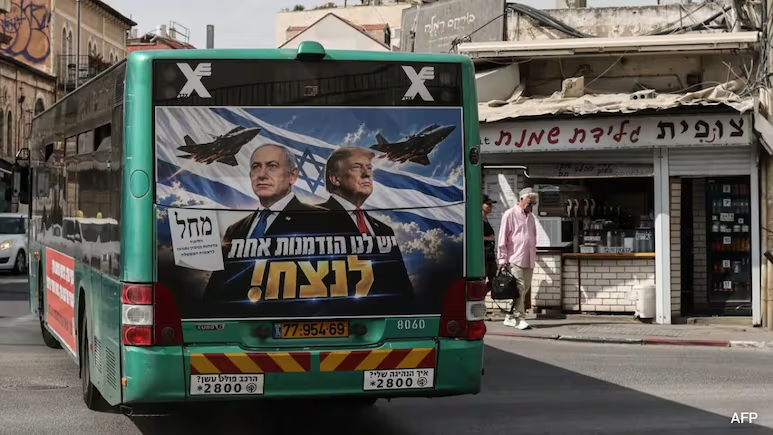
Supporters view these operations as evidence that the country has responded forcefully to threats following October 7. Netanyahu has also highlighted his relationship with US President Donald Trump and argued that his experience makes him better equipped to manage regional security challenges.
However, the prime minister faces criticism from Israelis who believe his government bears political responsibility for the security failures. Some former supporters have moved towards more hardline parties, while others want a change in leadership and a formal investigation.
The result reflects competing interpretations of the same period: some voters prioritise military strength, while others place greater emphasis on accountability and changes in government.
Far-Right Parties Seek Younger Voters
Far-right parties have focused on younger Israelis through social media campaigns and messages emphasising military strength, security and territorial control.
An October 9 poll published by an Israeli newspaper indicated that more than 16 per cent of first-time voters were expected to support far-right parties. The findings suggest that the security environment following October 7 has influenced political attitudes among some younger voters.
At the same time, younger Israelis and families affected by the attacks do not share a single political position. Some favour tougher military policies, while others question whether the government’s approach has made the country safer.
Gaza and the Wider Political Divide
Israel’s military campaign in Gaza has caused extensive destruction and a severe humanitarian crisis. By October 2026, Gaza’s health authorities had reported more than 74,000 Palestinian deaths.
Yet the Israeli election campaign has focused predominantly on national security, the October 7 attacks and domestic political divisions. Discussions about Palestinian statehood and future peace negotiations have remained limited, including among opposition parties that favour changes in government.
The debate illustrates the difficulty of separating Israel’s internal political choices from the wider regional conflict.
Coalition Negotiations Could Determine the Outcome
Israel’s parliamentary system requires parties to secure sufficient support in the 120-seat Knesset to form a government. A close election may therefore lead to lengthy coalition negotiations even after the final results are known.
Arab-led parties could become important to the coalition arithmetic if neither major bloc secures a majority, although several Jewish opposition parties have ruled out relying on their support.
The election is ultimately testing more than Netanyahu’s personal standing. It is also exposing disagreements over security policy, democratic institutions, military obligations and the country’s future relationship with the Palestinians.
Whether the vote produces a change in leadership or another Netanyahu-led government, the unresolved questions surrounding October 7 are likely to remain central to Israel’s political debate