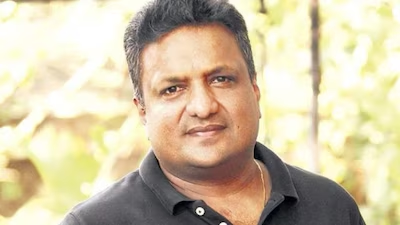
Namit Malhotra, the producer behind the ambitious two-part film adaptation of the Ramayana, has spoken about the financial crisis that nearly derailed his business ambitions in 2008. Nearly two decades after losing 90 per cent of his wealth during the global economic downturn, Malhotra is now leading a major cinematic project reportedly backed by a combined budget of around ₹4,000 crore.
Speaking at a special presentation of Ramayana in Los Angeles, the filmmaker described the occasion as his personal “Oscar moment”. The event, held at the Academy Theatre, brought together members of the film's creative team and offered Malhotra an opportunity to reflect on his journey from a small Mumbai-based business to an international entertainment enterprise.
A Difficult Period During the 2008 Financial Crisis
Malhotra moved to Los Angeles in 2007 with the ambition of building a company that could connect Indian filmmaking with international production expertise. However, the global financial crisis that followed created serious difficulties for his business.
Recalling that period, he revealed that he lost approximately 90 per cent of his wealth in 2008. The setback came at a time when he was attempting to expand his operations internationally and establish a stronger presence in the global entertainment industry.
Despite the financial pressure, Malhotra continued working towards his long-term vision. He credited his family and the people who supported him during the difficult years for helping him rebuild his business and pursue larger ambitions.
From a Mumbai Garage to a Global Visual Effects Company
Malhotra's professional journey began when he was around 19 years old. He started a small video-editing and computer-graphics venture from a garage in Mumbai, initially working with an Apple computer and three of his former teachers.
In 1997, the business combined with his father's equipment-rental venture to establish Prime Focus Limited. The company gradually expanded its services across film production, post-production and visual effects.
A significant milestone came in 2014, when Prime Focus merged with the London-based visual-effects studio Double Negative. The combined business later became known as DNEG, which developed into an internationally recognised visual-effects company.
DNEG has contributed to major Hollywood productions and collaborated with prominent filmmakers, including Christopher Nolan and Denis Villeneuve. Malhotra highlighted the company's record of eight Academy Awards, seven of which were won for visual-effects work over an 11-year period.
Why the Los Angeles Presentation Was Special
Malhotra said hosting the presentation at the Academy Theatre carried personal significance because it represented how far he had travelled from his early entrepreneurial days.
He described the event as a milestone after years of building an international company and working with leading creative professionals. He also acknowledged his parents, Nita and Naresh Malhotra, and his wife for supporting him throughout his career.
His father, a filmmaker, had encouraged him to enter film production. Malhotra initially chose to work in post-production and visual effects, hoping that the experience would eventually allow him to produce films of his own.
With Ramayana, that ambition has taken shape on a much larger scale.
Inside the ₹4,000-Crore Ramayana Project
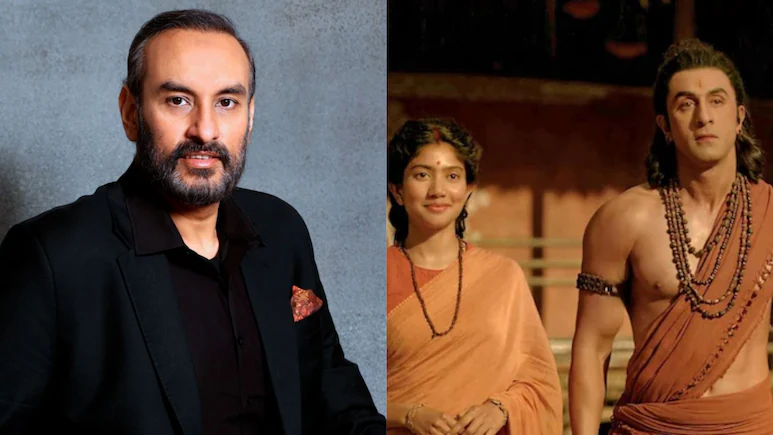
Directed by Nitesh Tiwari and co-produced by actor Yash, Ramayana is being developed as a two-part cinematic adaptation of the Indian epic. The combined budget has been reported at approximately ₹4,000 crore, or around $500 million.
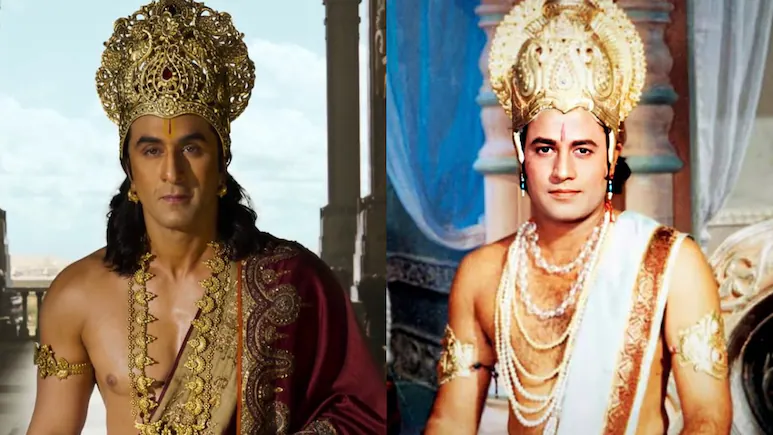
The film features Ranbir Kapoor as Ram, Sai Pallavi as Sita and Yash as Ravana. The wider cast includes Sunny Deol, Ravi Dubey, Lara Dutta, Vivek Oberoi and Arun Govil.
The first instalment is scheduled for a worldwide theatrical release on November 5, 2026, with the second part planned for Diwali 2027.
For Malhotra, the project represents more than a major film investment. It brings together his experience in visual effects, international production and Indian storytelling, marking a new phase in a career that began with a small business in Mumbai.