Understanding Mud Therapy
Mud therapy is a traditional complementary wellness practice involving the application of prepared mud or clay to selected areas of the body. Some people find it cooling and relaxing, while certain cosmetic clays can absorb excess oil from the skin. Results depend on the material used and the individual’s skin condition.
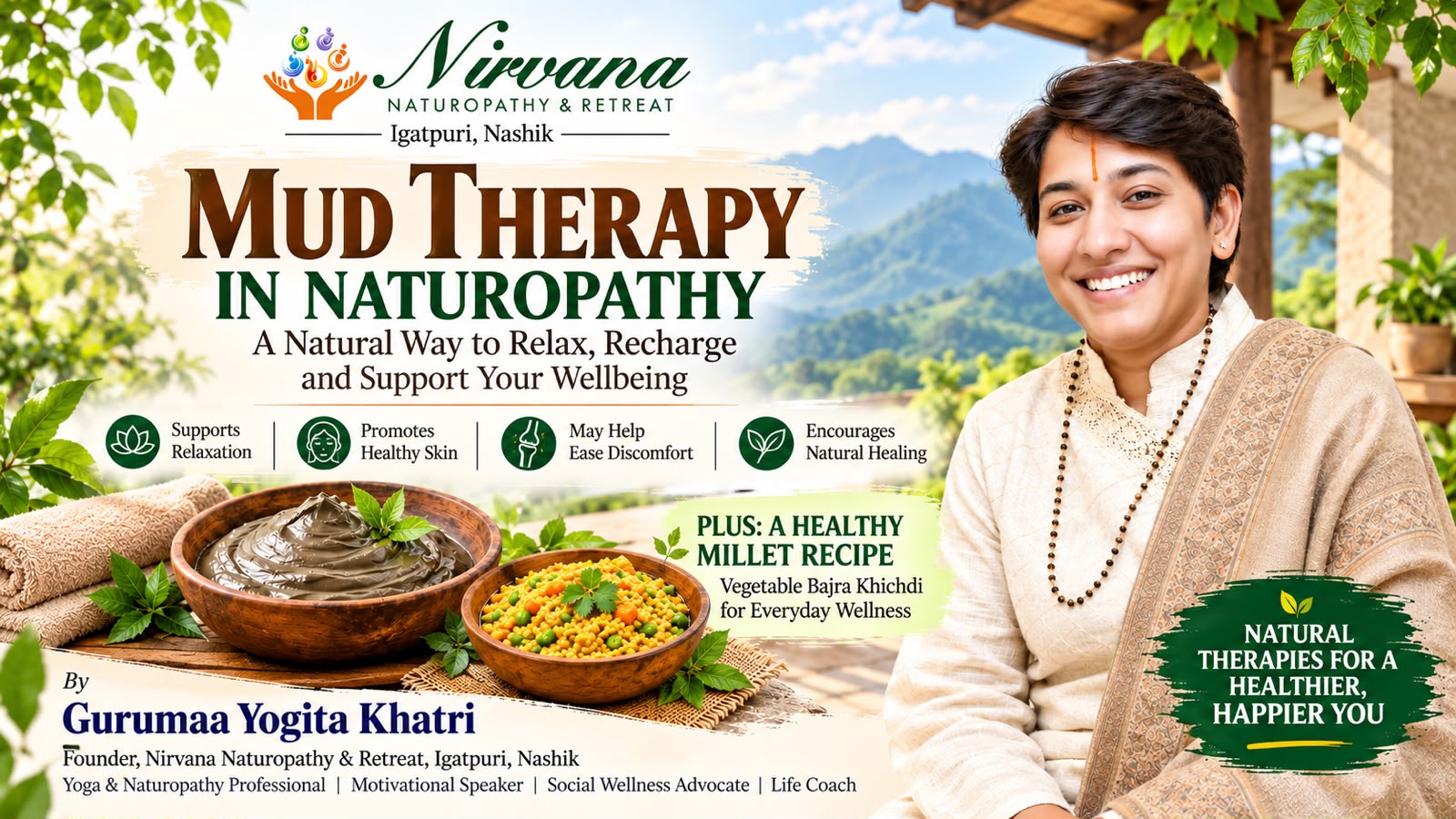
At Nirvana Naturopathy & Retreat in Igatpuri, Nashik, founder Gurumaa Yogita Khatri encourages people to approach natural wellness with realistic expectations. Traditional use alone does not prove that a therapy treats a medical condition, and evidence for many claims about mud applications remains limited.
What Can Mud Therapy Offer?
Relaxation: A comfortable mud application in a calm setting may give some people an opportunity to unwind as part of a self-care routine.
A cooling sensation: Properly prepared mud may feel cool against the skin, but it should not be used to treat fever, heatstroke or an underlying medical problem.
Selected skincare needs: Some cosmetic clays absorb excess surface oil. Suitability depends on the product and skin type; unsuitable products or frequent use may cause dryness or irritation.
A broader wellness routine: Mud therapy may be included alongside balanced nutrition, movement, adequate sleep and stress management. These habits remain important whether or not someone chooses the treatment.
Self-care awareness: Setting aside time for a wellness session may encourage people to pay attention to their habits. Long-term wellbeing, however, depends on consistent choices rather than occasional treatments.
What Mud Therapy Cannot Do
Mud therapy has not been established as a cure for arthritis, diabetes, obesity or chronic skin conditions. Claims that mud draws toxins out of internal organs are not supported by strong evidence. The liver and kidneys play key roles in processing and eliminating waste.
Anyone seeking help for a specific symptom should discuss suitable options with a qualified healthcare professional. Complementary practices should not delay diagnosis or replace prescribed treatment.
Safety and Hygiene Matter
Natural does not automatically mean safe. Mud intended for skin application should come from a reliable source and be prepared hygienically. Soil collected from gardens, roadsides or other open areas may contain microorganisms, pollutants or other contaminants.
Avoid applying mud to open wounds, infected skin or irritated areas. People with sensitive skin, allergies, reduced skin sensation or circulation problems should seek professional advice first. Stop if burning, itching, pain or unusual redness occurs.
Persistent joint pain, unexplained swelling or worsening skin symptoms require medical assessment. A responsible wellness provider should consider individual needs and explain a treatment’s limitations.
Other Complementary Practices
Some wellness programmes include hydrotherapy, which uses water in different forms and temperatures; yoga and pranayama, which can support movement and relaxation when appropriately adapted; and meditation, which may help some people manage everyday stress.
Jal Neti is a traditional yogic nasal-rinsing practice that requires proper technique and safe water, such as distilled or sterile water, or tap water boiled and cooled according to public-health guidance. Dietary guidance may encourage varied meals containing vegetables, fruit, pulses, whole grains and millets.
Scientific evidence varies across complementary practices. They should be selected carefully and used alongside—not instead of—necessary medical care.
A Simple Meal: Vegetable Bajra Khichdi
Pearl millet, commonly called bajra, can add fibre and nutrients to a varied diet. To prepare a simple vegetarian meal, soak and wash half a cup of bajra. Combine it with a quarter cup of washed yellow moong dal, one chopped carrot, half a cup of seasonal vegetables, cumin, turmeric, salt and three to four cups of water.
Heat a teaspoon of oil or ghee in a pressure cooker and add cumin. Stir in the vegetables, dal, turmeric and drained bajra. Add water and salt, then cook according to the cooker’s instructions until soft. Adjust the water for a softer texture and serve warm.
Making Informed Wellness Choices
Before choosing a therapy, consider your goal: relaxation, support for a specific symptom or a longer-term lifestyle change. Different needs call for different approaches, and no single treatment is suitable for everyone.
Gurumaa Yogita Khatri, founder of Nirvana Naturopathy & Retreat in Igatpuri, Nashik, highlights the importance of understanding a practice, its limitations and its safe use. Mud therapy may offer a cooling sensation and relaxation for some people, but it should not be promoted as a proven treatment for serious or chronic disease.
By Gurumaa Yogita Khatri
Founder, Nirvana Naturopathy & Retreat, Igatpuri, Nashik
Disclaimer: This article is for general health education and is not a substitute for medical advice, diagnosis or treatment. Consult a qualified healthcare professional before starting a complementary therapy if you have an existing medical condition.
Website: www.nirvananaturopathy.com