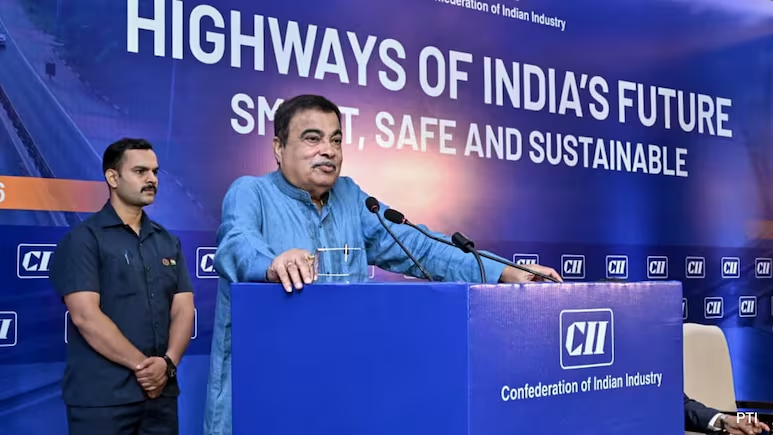
Union Road Transport and Highways Minister Nitin Gadkari has described the public backlash against E20 petrol as a “paid campaign”, disputing criticism of India’s ethanol-blending programme. His remarks came as the government introduced regulatory changes permitting specially designed flex-fuel vehicles to operate on fuel containing up to 100 per cent ethanol.
Speaking at an event organised by the Confederation of Indian Industry (CII) on October 27, Gadkari defended the government’s efforts to increase the use of alternative fuels. He argued that ethanol production could reduce India’s reliance on imported fossil fuels and help retain more money within the domestic economy.
His comments have renewed debate over fuel efficiency, vehicle compatibility and the long-term impact of ethanol-blended petrol on motorists.
Gadkari Questions the Scale of Opposition to E20
E20 petrol contains 20 per cent ethanol blended with conventional petrol. The fuel has become widely available in India as part of the government’s strategy to reduce crude oil imports and expand the use of domestically produced alternatives.
Gadkari said millions of cars and two-wheelers had been using E20 and questioned why criticism had intensified in recent months. He characterised the opposition as a paid effort, although he did not publicly establish evidence identifying who allegedly financed such a campaign.
The minister also highlighted the economic benefits of producing ethanol, methanol, biodiesel, liquefied natural gas, compressed biogas, hydrogen and aviation biofuel in India.
The government’s wider alternative-fuel strategy aims to diversify the country’s energy sources while supporting domestic industries and agricultural producers.
Government Opens the Way for E100-Compatible Vehicles
The minister’s comments followed an amendment to the Central Motor Vehicles Rules, 1989, allowing regulatory certification for flex-fuel vehicles capable of operating on ethanol blends of up to E100.
E100 refers to fuel consisting almost entirely of ethanol. Unlike conventional petrol vehicles, flex-fuel vehicles are specifically engineered to accommodate higher ethanol concentrations through compatible fuel-system components and engine-management technology.
The change is intended to support the development and introduction of vehicles designed for higher ethanol blends. It does not mean that every petrol-powered car or motorcycle can use E100.
Vehicles must be specifically designed and approved for the relevant fuel. Motorists therefore need to follow the fuel specifications stated in their vehicle’s owner’s manual and manufacturer guidance.
Fuel Efficiency and Engine Compatibility Remain Key Concerns
The E20 debate has largely centred on reports of reduced mileage, vehicle performance and potential maintenance concerns, particularly among owners of older vehicles.
Ethanol contains less energy per litre than petrol, which can affect fuel economy. The extent of any difference depends on the vehicle’s design, engine calibration and the fuel blend being used.
Automobile compatibility is another important consideration. Vehicles designed for lower ethanol concentrations may have different material and component requirements from those engineered for E20 or higher blends.
While the government has defended the programme, motorists’ concerns have kept questions about fuel economy, maintenance costs and the availability of alternative fuel options in public discussion.
India’s Push to Reduce Dependence on Imported Oil
India relies heavily on imported crude oil, making fuel diversification an important economic and energy-security objective. Increasing domestic ethanol production could reduce demand for some imported fossil fuels while creating additional markets for agricultural feedstocks.
The government also views alternative fuels as part of its broader effort to reduce emissions from transport. The actual environmental benefits, however, depend on how the fuel is produced, the resources used in its production and its performance in vehicles.
Gadkari’s latest remarks underline the government’s commitment to expanding ethanol use. The continuing debate will depend not only on policy objectives but also on vehicle compatibility, real-world fuel economy and the experience of consumers using different petrol blends.