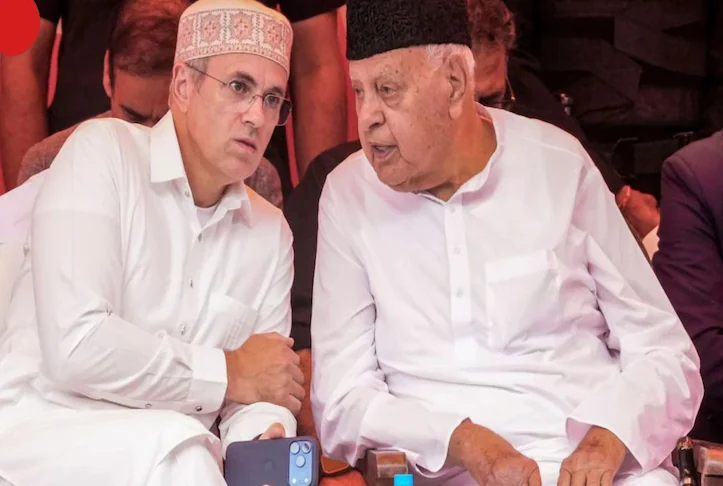
Jammu and Kashmir Chief Minister Omar Abdullah is facing growing dissatisfaction within his own party after a group of National Conference (NC) legislators met in Srinagar to discuss concerns over the recent Cabinet expansion and the functioning of the government.
The meeting, held on Friday, October 30, brought together several lawmakers from the Kashmir Valley and Jammu region. According to reports, the group discussed a set of demands seeking greater accountability, more influence for elected representatives and changes in the Council of Ministers.
While some accounts reported that 24 legislators had extended support to the group, other reports put the number of lawmakers who attended the meeting at around 17 to 19. The figures reflect different accounts of attendance and support, rather than a confirmed count of legislators joining a formal rebellion.
MLAs Seek Removal of Chief Minister's Adviser
One of the principal demands raised by the dissatisfied legislators concerns the removal of Nasir Aslam Wani, an adviser to Chief Minister Omar Abdullah. Some lawmakers have reportedly objected to his influence over party and administrative matters.
The group has also sought changes involving certain ministers, including Deputy Chief Minister Surinder Choudhary. Other demands reportedly include dropping ministers who have completed two years in office, restructuring the Cabinet and establishing a clearer roadmap for implementing the party's election manifesto.
The legislators have also called for greater empowerment of MLAs in government decision-making. They argue that elected representatives should have a meaningful role in policy discussions and constituency-related matters.
Some participants reportedly said their objections were directed at the functioning of the party leadership rather than the National Conference itself. They described their demands as an effort to improve internal democracy and strengthen the organisation.
Cabinet Expansion Triggers Discontent
The latest disagreement follows the Cabinet expansion carried out on October 27, when four legislators were inducted into Omar Abdullah's government. The new ministers included Ali Mohammad Sagar, Shameema Firdous, Mir Saifullah and Altaf Ahmad Kaloo.
The expansion had been expected to address concerns among party legislators and distribute responsibilities within the government. However, several senior leaders who were not included reportedly expressed disappointment.
The exclusion of experienced lawmakers from ministerial positions became a major point of discussion among party members. Supporters of some overlooked leaders also raised questions about the selection process and the representation of different regions.
The dissatisfaction has therefore extended beyond individual appointments to broader concerns about consultation, seniority and the distribution of political responsibilities.
National Conference Leadership Faces Pressure
The National Conference holds 41 seats in the 90-member Jammu and Kashmir Legislative Assembly. It formed the government with support from the Congress, smaller parties and independent legislators.
The reported dissent is significant because it involves members of the ruling party across different regions. However, the meeting alone does not establish that the government faces an immediate threat to its legislative majority.
Party leaders and lawmakers have also sought to play down suggestions of an imminent split, with some describing the gathering as an opportunity to discuss internal concerns.
The reported disagreement has emerged alongside tensions involving Srinagar MP Aga Syed Ruhullah, who has announced plans to leave the party and resign from his parliamentary seat on November 3. His differences with the Abdullah family have added another dimension to the challenges facing the organisation.
What Happens Next?
The dissatisfied legislators are seeking an opportunity to present their concerns directly to Omar Abdullah and the senior party leadership. Their demands could lead to further discussions over Cabinet responsibilities, the role of political advisers and the implementation of the party's commitments.
For Omar Abdullah, the immediate challenge is to address the grievances without allowing disagreements over ministerial appointments to develop into a wider organisational dispute.
Whether the legislators' demands result in changes to the government or remain part of an internal negotiation will become clearer after the party leadership responds. For now, the episode has brought questions about internal consultation and political representation to the centre of the National Conference's attention.