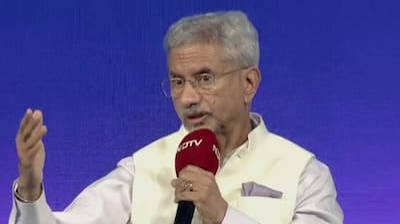
External Affairs Minister S Jaishankar has said that India and China should recognise and address their differences while working to maintain a stable bilateral relationship. Speaking at a global summit in New Delhi on October 25, 2026, he emphasised that disagreements between two large neighbouring countries were inevitable, but managing them through dialogue remained important.
Jaishankar said both countries had an interest in maintaining a functional relationship despite unresolved questions. He stressed that restoring peace and stability along the India-China border was essential for improving ties across other areas, including trade, diplomatic engagement and exchanges between their citizens.
His remarks come as the two Asian powers continue efforts to move beyond the tensions triggered by the 2020 border clashes in the Galwan Valley.
India-China Border Dispute Remains a Key Challenge
During the discussion, Jaishankar was asked whether India's approach to resolving the longstanding boundary dispute had changed. He maintained that any final settlement would need to cover the entire boundary shared by the two countries.
However, he indicated that discussions could begin with specific areas as a practical way to make progress. Starting negotiations on particular sections, he suggested, would not change the requirement for a comprehensive settlement.
India and China have yet to agree on a formally demarcated boundary. Their differing perceptions of the frontier have contributed to recurring tensions, particularly along the Line of Actual Control, which separates areas under their respective military control.
The dispute has remained one of the most sensitive issues in bilateral relations. Both sides have held diplomatic and military-level discussions over the years to manage tensions and prevent local confrontations from escalating.
Jaishankar's comments indicate that India continues to distinguish between beginning practical negotiations and reaching a final agreement on the entire boundary.
Why Border Peace Is Central to Normal Relations
The minister highlighted that peace and tranquillity along the border had long been a fundamental principle of India-China engagement. Over several decades, the two countries developed agreements and procedures governing patrols, communication and the conduct of personnel in border areas.
These arrangements were intended to reduce misunderstandings and help prevent incidents from developing into larger confrontations.
The situation changed dramatically in 2020, when clashes in the Galwan Valley resulted in fatalities on both sides. The incident severely damaged bilateral trust and affected relations well beyond the disputed frontier.
Jaishankar said the breakdown of border peace had consequences for the wider relationship. Political engagement, commercial ties and exchanges between people were all affected by the deterioration in relations.
He argued that restoring stability on the border was a necessary step towards normalisation, while acknowledging that rebuilding the relationship would take time.
Both Countries Have an Interest in Stability
Jaishankar said India and China shared an interest in retaining the ability to engage with each other, even when disagreements remained unresolved.
He acknowledged that the hostility that followed the Galwan clashes was understandable given the circumstances. However, maintaining an entirely confrontational relationship would not serve either country's national interests.
His remarks reflected an approach focused on managing competition and disagreements rather than assuming that improved relations would eliminate every outstanding problem.
India and China have significant economic and strategic interests, making the management of bilateral tensions important for both countries. At the same time, the unresolved boundary dispute continues to place limits on the extent to which relations can return to normal.
Economic and Diplomatic Ties Face Continuing Tests
The border issue is not the only challenge affecting relations between New Delhi and Beijing. Economic concerns, trade imbalances and market-access difficulties have also featured in India's engagement with China.
India has sought a more balanced economic relationship while maintaining its position that border stability is essential for broader diplomatic progress.
Jaishankar's latest remarks suggest that improvements in communication and border management should not be mistaken for a complete resolution of bilateral differences.
For India and China, the immediate challenge remains building a stable framework for engagement while continuing discussions on difficult issues. A comprehensive boundary settlement remains a longer-term objective, and the path towards it will depend on sustained negotiations and the ability of both sides to manage disagreements without renewed escalation.