Saudi Arabia’s energy infrastructure is facing renewed security concerns as drone attacks increasingly threaten oil production facilities, pipelines and export routes. Recent incidents at major energy sites have highlighted how relatively inexpensive unmanned aerial vehicles can create significant risks for infrastructure that plays a crucial role in global oil supplies.
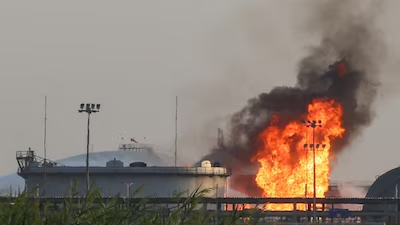
The latest incident occurred on October 21, when Saudi air defences intercepted a drone attempting to strike a facility at the Shaybah oil field in the country’s Eastern Province. Debris from the interception reportedly caused a fire in a contractor’s vehicle outside the facility perimeter. Two foreign nationals were killed and two others were injured, according to Saudi authorities. Officials said oil field operations were not affected.
The incident has renewed attention on the vulnerability of energy facilities across the kingdom, particularly as regional tensions and attacks on critical infrastructure continue to complicate security planning.
Abqaiq Attack Changed the Security Debate
The 2019 attacks on Saudi Arabia’s Abqaiq oil processing facility and Khurais oil field marked a major turning point in discussions about the vulnerability of energy infrastructure. The coordinated strikes temporarily disrupted a substantial portion of the kingdom’s oil production capacity and demonstrated that aerial attacks could have consequences far beyond the immediate target.
Abqaiq is particularly important because it processes crude oil before it moves through the wider export network. Damage to a facility of this kind can therefore affect the flow of oil even when production fields elsewhere remain operational.
The incident prompted Saudi Arabia and energy companies to reassess their approach to protecting critical facilities. Greater attention has since been directed towards air defence, surveillance, emergency response capabilities and the ability to restore operations quickly after an attack.
Why Shaybah and Remote Oil Facilities Matter
The Shaybah oil field is located in Saudi Arabia’s remote Empty Quarter region, near the kingdom’s southern borders. Its location and importance to national energy production make its security a significant concern.
Remote facilities can present particular challenges because they cover large areas and may be far from major population centres and emergency services. Protecting them requires monitoring potential aerial threats while ensuring that workers, equipment and surrounding infrastructure remain secure.
Drone incidents also demonstrate that an attack does not necessarily need to damage a main processing unit to create disruption. An interception can produce falling debris, fires or other hazards, even if the intended target remains operational.
Saudi authorities have previously reported intercepting drones heading towards Shaybah. The latest incident reinforces the continuing need to protect oil installations against repeated attempts to strike them.
Pipelines Add Another Layer of Vulnerability
Oil production is only one part of the energy supply chain. Pipelines, pumping stations, processing plants, storage facilities and export terminals must also operate reliably for crude oil to reach international markets.
Saudi Arabia’s East-West pipeline is particularly important because it transports crude from the kingdom’s eastern oil-producing region towards Yanbu on the Red Sea. The route provides an alternative export pathway when shipping through the Strait of Hormuz is constrained.
A drone attack on the pipeline in September 2026 led Saudi Arabia to suspend operations temporarily while officials assessed the damage and secured the infrastructure. The incident illustrated how an attack on a transport route can affect energy exports even without directly targeting a major oil field.
Because pipelines extend across long distances, protecting every section presents a different challenge from defending a single industrial facility. Pumping stations and other essential operating points can become potential vulnerabilities.
Faster Repairs Help Limit Disruption
Saudi Aramco has invested in emergency response teams, spare-part inventories and inspection technology to reduce recovery times after attacks. Drones can also help assess damage and provide information to repair crews while an incident is still unfolding.
These capabilities are important because the economic consequences of an attack depend not only on the initial damage but also on how long operations remain disrupted. Rapid repairs can reduce production losses, although they cannot eliminate the risk of further attacks or problems affecting export routes.
Implications for Global Energy Security
Saudi Arabia is one of the world’s most important oil producers, making the security of its energy infrastructure a concern for international markets. Major disruptions can affect supply expectations, shipping arrangements and crude oil prices, particularly when alternative routes are already under pressure.
The recent incidents show that protecting energy supplies requires more than defending individual oil fields. Production facilities, pipelines and export terminals function as interconnected parts of a wider system, and disruption at one critical point can affect the entire chain.
As drone technology becomes more accessible, Saudi Arabia faces the challenge of maintaining reliable energy operations while strengthening protection against evolving aerial threats. The effectiveness of surveillance, air defence, emergency planning and rapid repairs will remain central to limiting the impact of future incidents.