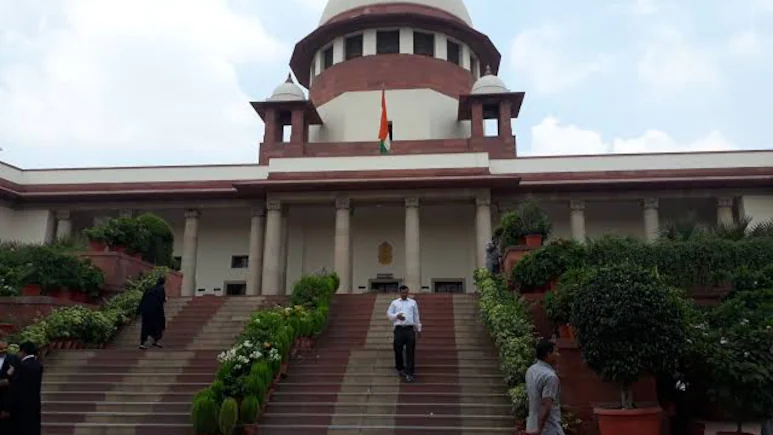
The Supreme Court of India has raised serious concerns over the Ministry of Corporate Affairs’ influence on the administration and recruitment of the National Company Law Tribunal (NCLT), warning that excessive ministerial control could undermine the institution’s independence.
The observations were made on October 29 by a three-judge bench headed by Chief Justice of India Surya Kant, along with Justices Joymalya Bagchi and V. Mohana. The court was hearing matters concerning staff shortages, infrastructure problems and administrative difficulties affecting the NCLT and the National Company Law Appellate Tribunal (NCLAT).
The Chief Justice remarked that the tribunals had been “completely hijacked” by the ministry and stressed that their presidents should have greater autonomy over institutional administration and appointments.
Dispute Over Outsourced Recruitment
The hearing also examined a recruitment arrangement under which the ministry had engaged a private company to provide administrative personnel for the NCLT. The proposed arrangement reportedly involved positions such as deputy registrars, assistant registrars and stenographers.
Senior advocate Meenakshi Arora, representing existing contractual employees, argued that the new arrangement could result in workers being displaced from November 1 or 2. She told the court that some employees had served the tribunal for several years and that their employment rights and the applicable recruitment rules needed consideration.
The bench, however, was not inclined to protect contractual employees simply because of their length of service. It questioned whether individuals appointed without a competitive recruitment process could claim automatic regularisation or a right to continue in their positions.
The court also expressed concerns about the role of private contractors in staffing a judicial institution. It indicated that appointment authority should rest with the NCLT president rather than being controlled by outside agencies.
Severe Staff Shortages Affect Tribunal Operations
The court was informed that the NCLT had 320 sanctioned regular administrative positions, but only 67 were filled. This left 253 administrative vacancies, creating significant pressure on the tribunal's functioning.
Additionally, 16 positions among judicial and technical members were reportedly vacant.
Infrastructure problems were another major concern. Senior advocate Sanjiv Sen, representing the NCLT Bar Association, described the deteriorating condition of the principal bench building in Delhi. He informed the court that the seventh and eighth floors had been closed and that structural problems were affecting the availability of courtrooms.
The shortage of personnel and inadequate facilities have raised concerns about the tribunal's ability to handle its growing workload efficiently.
Court Suggests Deputation and Regular Recruitment
As a possible short-term measure, the bench suggested bringing experienced government officials into the tribunals on deputation. It also indicated that permanent recruitment should subsequently take place through established institutions such as the Union Public Service Commission or the Staff Selection Commission.
The court asked the presidents of both the NCLT and NCLAT to prepare detailed proposals explaining their infrastructure, staffing and administrative requirements.
These proposals are expected to cover buildings, land, supporting personnel and the possible appointment of officers at deputy registrar or joint registrar level at individual benches to ensure proper maintenance of judicial records.
The tribunals have been asked to submit the information within four weeks. The bench also requested the Attorney General, R. Venkataramani, to communicate the urgency of providing basic facilities to the institutions to the Union government.
Wider Questions About Judicial Independence
The Supreme Court's observations highlight the importance of administrative independence for specialised tribunals that decide corporate disputes, insolvency cases and other significant commercial matters.
The bench also noted concerns about delays in cases arising under the Companies Act, with insolvency proceedings reportedly receiving greater priority.
The court issued notice on the connected petition challenging the outsourced recruitment arrangement, seeking responses from the concerned authorities. It did not grant an interim order preventing the displacement of existing contractual employees.
The next stage will involve examining the tribunal presidents' proposals and the government's response. The proceedings could have wider implications for how specialised judicial bodies manage recruitment, staffing and administrative responsibilities while maintaining institutional independence.