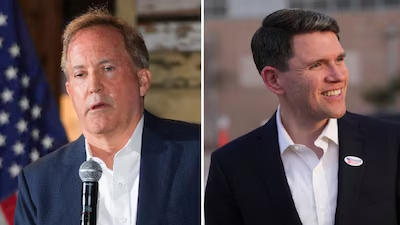
The Texas Senate race is emerging as one of the closely contested contests ahead of the November 3, 2026, US midterm elections, with Democratic state Representative James Talarico and Republican Texas Attorney General Ken Paxton running nearly level in recent opinion polls. The contest could have implications for control of the US Senate, as Democrats seek to gain seats while Republicans work to maintain their majority.
Recent surveys show a narrow gap between the two candidates, reflecting a competitive political environment in a state that has traditionally favoured Republicans in statewide elections. The campaign has drawn attention to economic concerns, party loyalty, immigration policy and the candidates' public records.
Recent Polls Show a Close Contest
Polling conducted in October indicates that neither candidate has established a decisive lead. A Fox News survey conducted from October 15 to 19 found Talarico and Paxton tied at 49% among likely voters.
An Emerson College survey conducted from October 17 to 19 placed Talarico at 49% and Paxton at 48%. Other polls have shown varying margins, reinforcing the close nature of the contest.
These results represent snapshots of voter preferences rather than predictions of the final outcome. Differences in survey methods, sampling and turnout assumptions can affect individual poll findings.
The election is scheduled for November 3, leaving both campaigns with limited time to persuade undecided voters and encourage their supporters to participate.
Who Are James Talarico and Ken Paxton?
Talarico is a Democratic member of the Texas House of Representatives and a former public school teacher. His campaign has focused on the cost of living, access to public services and concerns about the direction of the federal government.
Paxton, a Republican, serves as Texas attorney general and has built a national profile through legal battles involving federal policies and conservative causes. His campaign has appealed to voters who support Republican positions on immigration, government regulation and cultural issues.
The candidates represent different political approaches, and their campaigns have made those differences central to the Senate contest.
The seat is particularly important because the outcome could influence the balance of power in Washington, where the Senate plays a key role in confirming senior officials, approving legislation and overseeing federal appointments.
Economy and Immigration Shape the Debate
Economic pressures have become a prominent issue in the Texas campaign. Voters have expressed concerns about household expenses, while candidates have offered competing explanations for the challenges facing families.
Talarico has benefited in some surveys from support among voters who identify the cost of living as their main concern. Paxton, meanwhile, has sought to consolidate conservative support by emphasising immigration enforcement and other Republican priorities.
The debate also reflects differing views of President Donald Trump's influence on the election. Trump remains an important figure for Republican voters, while his administration's policies have become a point of criticism for many Democrats.
Polling suggests that the candidates have distinct areas of strength among demographic and political groups. However, the close overall figures indicate that turnout and the preferences of undecided voters could play an important role.
Campaign Spending Adds to the Race's Significance
The contest has attracted substantial financial support from political organisations on both sides. Outside groups have spent heavily on advertising, while the campaigns have sought to communicate their messages through television, digital media and public appearances.
The scale of spending reflects the importance of the Senate seat to the broader struggle for congressional control. Republican-aligned groups have backed Paxton, while Democratic organisations have invested in efforts to strengthen Talarico's campaign.
Advertising has also intensified scrutiny of the candidates' records and policy positions, making the race a prominent part of the national midterm debate.
Senate Control Could Be at Stake
Texas has long been considered a Republican stronghold in federal elections, but the close polling has brought renewed attention to the state's political dynamics.
A Democratic victory would represent a major development in the Senate contest and could affect the balance of power in Congress. A Republican win would help the party defend its position as lawmakers prepare for the final two years of Trump's presidential term.
With Election Day approaching, the race remains competitive. The final result will depend on voter participation, campaign mobilisation and whether either candidate can build a meaningful advantage before Texans cast their ballots.