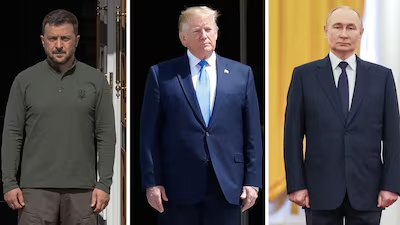
Representatives from the United States, Russia and Ukraine have begun a new round of trilateral negotiations in Abu Dhabi, seeking a path towards ending the war that has devastated Ukraine for more than four years. The talks, which began on November 10 and continued into Wednesday, November 11, mark the first such US-mediated meeting between the three sides since February.
The negotiations come amid renewed diplomatic efforts by US President Donald Trump to secure a settlement. However, major differences remain over territorial control, Ukraine’s future security arrangements and the conditions under which fighting could stop. Despite cautious optimism from Washington and Kyiv about the opening discussions, no breakthrough has been announced.
Why Are the Three Countries Meeting in Abu Dhabi?
The latest meeting is part of Washington’s renewed push to bring Moscow and Kyiv closer to a negotiated settlement. US envoys Steve Witkoff and Jared Kushner are involved in the diplomatic effort, with the United Arab Emirates hosting the discussions.
The agenda includes post-war security arrangements, de-escalation, humanitarian measures and possible steps towards ending the conflict. Ukrainian officials have also emphasised the need for credible security guarantees to prevent another Russian attack if a peace agreement is reached.
The first day of discussions lasted approximately four hours. US Secretary of State Marco Rubio described the talks as productive, while Ukrainian President Volodymyr Zelenskyy characterised them as constructive and substantive. A further session was scheduled for Wednesday, with officials indicating that considerable work remained.
Territorial Disputes Remain the Biggest Obstacle
The future of occupied Ukrainian territory remains one of the most difficult issues facing negotiators. Russia continues to demand control over the entire Donbas region, including areas that remain under Ukrainian control.
Moscow has also pushed for discussions about a broader European security framework, arguing that the wider security environment must be addressed alongside the war itself.
Ukraine, however, has rejected demands to surrender territory it has defended against Russian forces. Kyiv maintains that any settlement must protect its sovereignty and include security guarantees strong enough to deter future aggression.
Reports have suggested that US negotiators believe some flexibility might be possible on territorial questions. Ukrainian officials have pushed back against suggestions that Kyiv is prepared to make concessions without appropriate guarantees.
The talks therefore face a fundamental challenge: finding terms that both sides could accept without undermining their core security and territorial positions.
Ukraine Seeks Security Guarantees and a Lasting Ceasefire
For Kyiv, ending the fighting is only one part of a potential agreement. Ukrainian officials want assurances that Russia would not launch another invasion after a ceasefire or peace deal.
Zelenskyy has identified several priorities, including security guarantees, an energy ceasefire, reopening access through the Black Sea and further prisoner exchanges. Ukraine has also sought a meeting involving the leaders of the United States, Russia and Ukraine to address the most difficult political questions directly.
Russia, meanwhile, has shown little willingness to accept a ceasefire on terms that would allow Ukraine to strengthen its military position. This disagreement has complicated earlier diplomatic efforts and remains a significant barrier to progress.
Europe Wants a Role in the Negotiations
European governments are concerned that a settlement reached without their involvement could affect the continent’s long-term security. France and other European partners have argued that any durable agreement must account for European security interests.
Moscow has resisted including European representatives in the main trilateral negotiations, while European leaders have called for a greater role in decisions that could reshape the region’s security arrangements.
The disagreement reflects a broader question surrounding the negotiations: whether the United States, Russia and Ukraine can reach a workable settlement without wider agreement among Ukraine’s European partners.
Prisoner Exchanges and Humanitarian Measures
Even if a comprehensive peace agreement remains out of reach, the talks could produce progress on humanitarian issues. These include the exchange of prisoners of war and other measures intended to reduce the immediate consequences of the conflict.
Ukrainian officials indicated that a large-scale prisoner exchange was discussed during the opening session, although details were still being worked out. Such an agreement could provide a limited but tangible outcome while negotiations on territory and security continue.
Can the Abu Dhabi Talks Deliver a Breakthrough?
The negotiations offer a renewed opportunity for diplomacy, but expectations remain cautious. Russia and Ukraine continue to hold sharply different positions on territory, security guarantees and the conditions required to end the war.
The opening session produced encouraging statements from US and Ukrainian officials, but neither side announced an agreement that would bring the fighting to an end. Reports of continued attacks during the negotiations also underline how far the countries remain from a comprehensive settlement.
The immediate focus is on whether the second day of talks can produce concrete progress on humanitarian measures, security arrangements or preparations for further high-level discussions.
For now, Abu Dhabi represents another attempt to move the conflict towards a negotiated solution. Whether that effort succeeds will depend on the willingness of Moscow and Kyiv to narrow their differences and accept terms that can provide a credible and lasting peace.