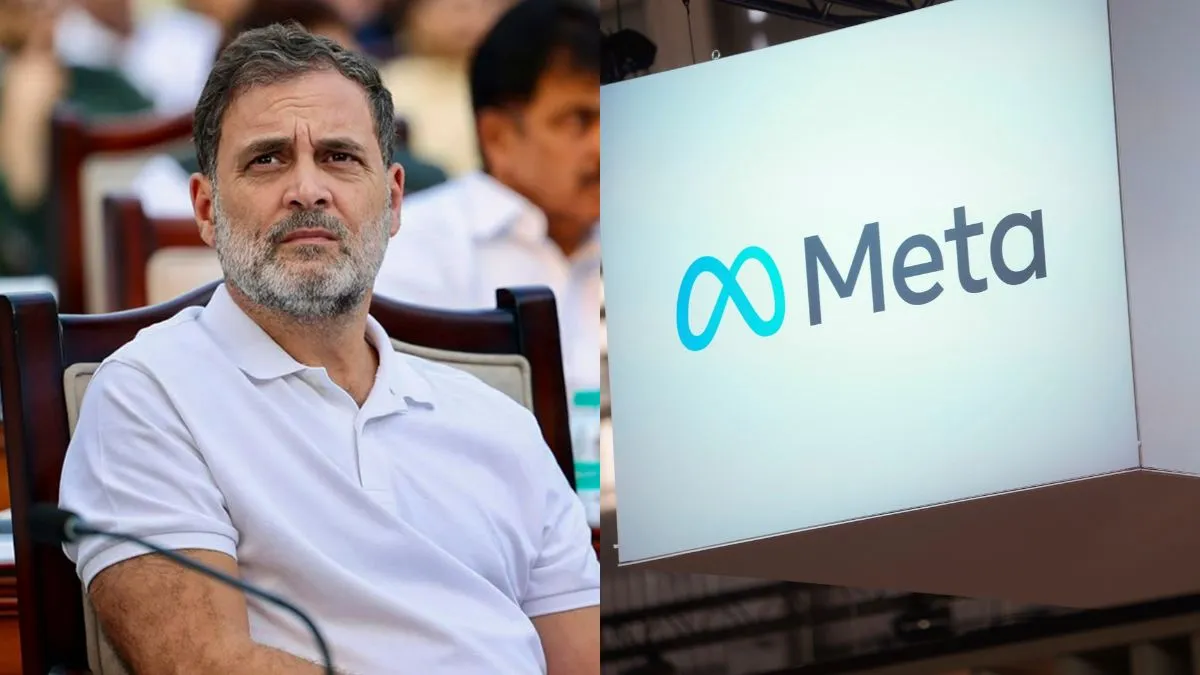
The Indian Youth Congress has approached the Delhi High Court, accusing Meta Platforms of automatically restricting social media posts that mention Congress leader Rahul Gandhi or feature his photographs. The petition challenges the legal framework governing automated content moderation on platforms such as Facebook and Instagram, raising questions about transparency, political expression and the safeguards available to users whose content is blocked.
The plea was filed by Indian Youth Congress national secretary Manu Jain through advocate Rishav Ranjan. Jain, who oversees the organisation’s social media activities, has alleged that ordinary political and personal posts shared by Congress workers and office-bearers have been made unavailable to users in India.
Youth Congress Questions Restrictions on Rahul Gandhi Posts
According to the petition, several Congress members received notices between September 29 and November 23, 2026, informing them that their posts could no longer be viewed in India.
The affected content reportedly included a wedding invitation extended to Rahul Gandhi, birthday wishes exchanged between party workers, tributes to a former prime minister, photographs of workers with Gandhi and material related to his lecture at the University of Chicago.
The petition argues that the common element across these posts was the presence of Rahul Gandhi’s name or photograph. The organisation has questioned why such content was restricted despite being described as routine political or personal material.
Jain has also alleged that the notices did not provide copies of the specific orders behind the restrictions or adequately explain the reasons for the action. The plea states that some posts were restricted months after their publication, while content relating to Gandhi’s university lecture was reportedly blocked and restored on the same day.
These claims are allegations presented by the petitioner and have not been established as findings by the court.
Legal Challenge Targets Automated Content Moderation Rules
A central part of the petition concerns Rule 4(4) of the Information Technology Rules, 2021, which was amended through a notification issued on February 10, 2026, and came into effect on February 20.
The provision requires significant social media intermediaries to deploy automated tools to identify and address information that is exactly identical to content previously restricted under relevant legal orders.
The Youth Congress has challenged the provision, arguing that it permits content to be blocked without sufficient procedural safeguards or meaningful disclosure of the legal basis for restrictions.
The petitioner contends that the mechanism exceeds the authority granted under the Information Technology Act, 2000, and conflicts with constitutional protections for freedom of speech and expression. The plea also invokes safeguards associated with the Supreme Court’s judgment in Shreya Singhal v. Union of India, which addressed restrictions on online speech.
Petition Seeks Transparency From Meta and Government
The petition seeks directions requiring Meta and the central government to disclose the orders and criteria used to restrict the disputed posts. It specifically asks for clarity on whether Rahul Gandhi’s name or photographs were used as identifying triggers in the automated moderation process.
The legal challenge also questions government advisories issued in October 2026 concerning the identification of misleading and unlawful online content and the review of content-ranking and recommendation systems.
Dispute Comes Amid Wider Congress-Meta Tensions
The court action follows a broader confrontation between the Youth Congress and Meta over alleged restrictions on party-linked accounts and political content. The organisation has also accused the platform of applying its moderation policies inconsistently, claims that have fuelled protests and a public campaign against the company.
Meta has maintained in discussions with Congress representatives that it follows Indian law and operates under transparent policies. The company has not publicly confirmed the specific allegations concerning Rahul Gandhi-related posts.
The case could bring renewed scrutiny to automated moderation systems and the balance between enforcing legal restrictions and protecting legitimate online political expression.