Indoor plants can bring greenery into living spaces, add a calming touch to home décor and help create a more pleasant environment. For people living in cities where dust and pollution are everyday concerns, certain houseplants are also popular for their potential to absorb some airborne compounds under controlled conditions.
However, plants should not be considered a substitute for proper ventilation, regular cleaning or effective air filtration. Their air-cleaning impact in ordinary homes is generally limited compared with specialised air purifiers. Choosing plants that are easy to maintain can still make indoor spaces greener and more inviting without requiring extensive gardening experience.
Here are eight popular indoor plants that are relatively easy to care for.
8 Low-Maintenance Indoor Plants That Can Help Make Your Home Feel Fresher
Indoor plants are a popular way to bring greenery into homes while creating a more relaxing living environment. For people living in cities affected by dust, traffic emissions and seasonal smog, houseplants can also offer a natural way to make indoor spaces feel fresher. Several varieties are known for their ability to absorb certain airborne chemicals under controlled conditions.
However, indoor plants alone cannot remove enough pollution to replace proper ventilation or an effective air purifier. Their biggest everyday benefits include adding greenery, enhancing home décor and offering a manageable introduction to gardening.
Here are eight indoor plants that are relatively easy to maintain and can suit different corners of the home.
1. Snake Plant
Best for beginners and low-light corners
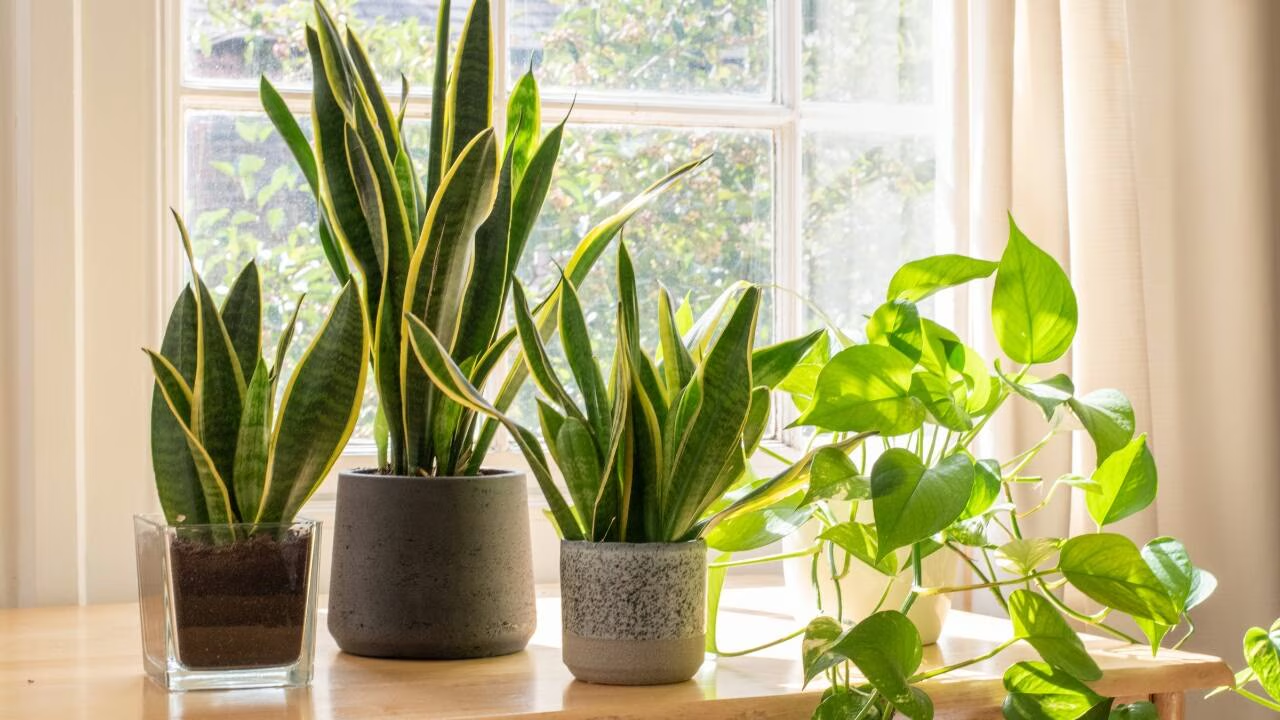
The snake plant is known for its upright, sword-shaped leaves and ability to tolerate periods without watering. It grows well in indirect light and does not require frequent attention, making it suitable for bedrooms, living rooms and offices.
Allow the soil to dry between watering sessions, as excess moisture can cause root rot. Its distinctive appearance also makes it a practical choice for compact spaces.
2. Money Plant (Devil’s Ivy)
Best for shelves and hanging planters
Money plant, also known as pothos or devil’s ivy, is a popular indoor choice because of its trailing vines and adaptability. It can grow in a hanging basket or climb along a support, adding greenery without occupying much floor space.
It generally thrives in indirect light and needs watering when the upper layer of soil becomes dry. Its flexible growth makes it suitable for beginners who want a plant that can be displayed in different ways.
3. Areca Palm
Best for living rooms
The areca palm features long, arching fronds that bring a tropical appearance to indoor spaces. It prefers bright, indirect light and moderately moist soil.
Unlike compact plants, it needs more room as it grows, making it a better choice for larger living rooms or well-lit corners. Its foliage can also contribute to indoor humidity through natural water release.
4. Spider Plant
Best for desks and small spaces
Spider plants are easy to grow and are recognised by their narrow, arching leaves, often edged with white or cream stripes. Mature plants produce small offshoots that can be separated and grown in new pots.
They adapt to a range of indoor conditions and generally do well in indirect light. Regular but moderate watering helps maintain healthy growth without leaving the roots sitting in water.
5. Rubber Plant
Best for a bold decorative statement
The rubber plant has broad, glossy leaves that can make it a striking feature in a living room or office. It prefers bright, indirect light and well-draining soil.
Its leaves can collect dust, so gently wiping them with a damp cloth helps keep the plant looking healthy. Avoid frequent overwatering, particularly when growth slows.
6. Aloe Vera
Best for sunny windowsills
Aloe vera is a succulent with thick leaves that store water, allowing it to tolerate dry conditions. It grows best in bright light and a pot with good drainage.
Water only when the soil has dried out, as soggy conditions can damage its roots. Aloe vera is a practical option for people who prefer plants that need relatively little watering.
7. Chinese Evergreen
Best for areas with indirect light
Chinese evergreen is valued for its patterned foliage and ability to grow in indoor environments without direct sunlight. Its leaves come in different shades of green, sometimes featuring silver or other decorative markings.
It prefers indirect light and soil that remains lightly moist rather than waterlogged. Keep it away from pets and young children, as the plant can be harmful if chewed or swallowed.
8. Bamboo Palm
Best for spacious indoor corners
The bamboo palm has slender stems and feather-like leaves that provide a soft, tropical look. It generally prefers indirect light, warm conditions and soil that does not dry out completely for extended periods.
Its size makes it suitable for larger rooms where it can be placed away from harsh direct sunlight. Consistent watering and occasional removal of damaged leaves help maintain its appearance.
Do Indoor Plants Really Reduce Air Pollution?
Some plants can absorb certain volatile organic compounds in laboratory conditions. However, research indicates that ordinary household plants generally have a limited effect on indoor pollution compared with ventilation and mechanical air filtration.
To improve indoor air quality, keep rooms appropriately ventilated when outdoor conditions allow, reduce indoor smoke and pollutant sources, and consider a suitable air purifier when pollution levels are high.
Choosing easy-care plants can still make a home greener and more inviting. The best option is one that suits the available light, space and watering routine, allowing the plant to thrive without demanding constant attention.