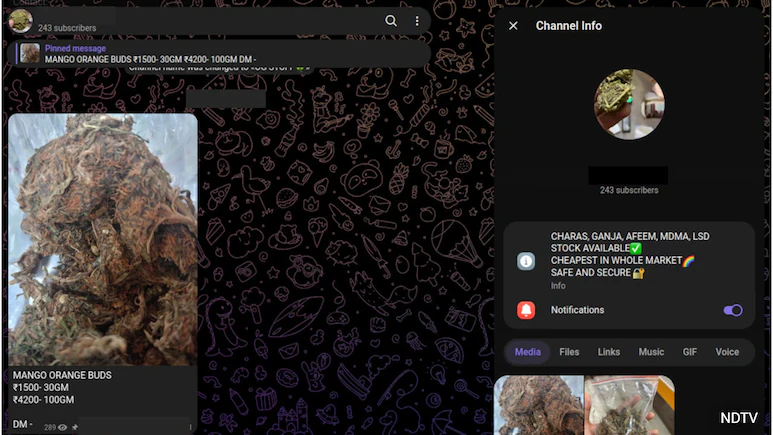
Ahmedabad cybercrime investigators have launched a probe into an alleged online drug-selling network operating through 24 dark web websites and five Telegram groups. The platforms reportedly advertised a range of prohibited narcotic substances and provided prospective buyers with instructions for making advance payments through digital channels, including cryptocurrencies.
A First Information Report (FIR) was registered on November 18, 2026, against unidentified individuals under the Narcotic Drugs and Psychotropic Substances (NDPS) Act, 1985, and the Information Technology Act, 2000. Officials disclosed details of the investigation on November 19.
The case highlights how online messaging platforms and hidden websites can be used to promote illegal drug sales while attempting to conceal the identities of those involved.
Police identify five Telegram groups and 24 hidden websites
The investigation began after Ahmedabad Cyber Crime Police's Social Media Monitoring Cell detected information about Telegram accounts and dark web portals allegedly advertising narcotics.
Investigators identified five Telegram groups or handles and 24 dark web links associated with the suspected activity. Some of the messaging groups reportedly had hundreds of members, while one group named Singapore Marketplace had more than 2,600 members.
The platforms allegedly promoted substances including cocaine, fentanyl, heroin, cannabis, ketamine, MDMA, ecstasy and LSD. Other listings reportedly included sedatives and additional controlled substances.
According to details recorded during the investigation, some of the websites operated like online storefronts, displaying product photographs, prices, customer reviews and claims about shipping. Such features can make illicit marketplaces resemble legitimate e-commerce platforms, despite the illegal nature of the products being advertised.
Cryptocurrency and advance payments under scrutiny
Investigators found that the suspected sellers directed potential customers to pay before receiving their orders. The payment methods mentioned in the material examined by police included UPI transfers, gift cards, cryptocurrency and other digital money-transfer services.
Cryptocurrencies such as Bitcoin and Ethereum were reportedly among the payment options associated with the websites.
Cybercrime investigators are examining the financial transactions connected to the suspected network to establish whether payment trails can help identify those operating the accounts and websites.
Although cryptocurrency transactions can be difficult to associate immediately with a real-world identity, transaction records and other digital evidence may provide investigators with leads when combined with technical information and account activity.
Police document digital evidence
To preserve evidence that could potentially disappear if accounts or websites were deleted, officers documented their observations using digital recording methods.
Investigators reportedly created a screen-recording video of approximately 2.05 GB and saved it, along with lists of the monitored Telegram groups and dark web links, to a 64 GB storage device.
They also collected 38 screenshots and maintained additional working copies of the evidence. Cryptographic hash values were generated to help establish whether the stored digital material had been altered. The evidence drives were sealed for possible presentation in court.
Preserving this information is important because online accounts can be renamed, deleted or made inaccessible, potentially complicating efforts to establish how the suspected operation functioned.
Investigation continues, no arrests reported
Deputy Commissioner of Police (Cyber Crime) Lavina Sinha said authorities were examining the financial transactions linked to the suspected drug network. Inspector D. J. Jadeja was also associated with the initial identification of the online accounts and portals, according to the case details.
As of November 19, officials had reported no arrests in the case. Investigators were continuing efforts to identify the people behind the Telegram groups and dark web websites.
The probe will focus on tracing digital identities, examining financial transactions and establishing the individuals responsible for advertising and allegedly selling prohibited substances.
The case underscores the challenges facing law enforcement as illegal drug markets increasingly use encrypted communications, hidden online services and digital payments. Establishing the identities of operators and gathering evidence that can withstand legal scrutiny will be central to the investigation