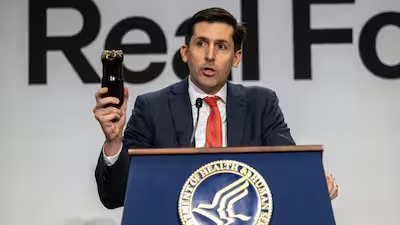
Calley Means, a senior adviser to US Health Secretary Robert F. Kennedy Jr. and a prominent advocate of the Make America Healthy Again (MAHA) movement, has resigned from the Trump administration. His departure comes amid growing frustration among supporters of the movement over the pace of proposed reforms to America's food system, nutrition policies and public health regulations.
Means announced his resignation on Thursday, October 22, 2026, expressing respect for President Donald Trump and Kennedy while indicating that he intends to continue supporting the movement's broader objectives. He did not publicly provide a specific reason for leaving his position.
His exit represents a notable development for the MAHA initiative, which has sought to address chronic diseases by changing food policies, scrutinising food additives and challenging established practices in the healthcare system.
Calley Means Played a Key Role in the MAHA Movement
Means became an influential figure in the administration's health policy agenda through his work with Kennedy. He initially served as a special government employee before moving into a permanent senior advisory position focused on food and nutrition policy in November 2025.
Alongside his sister, Casey Means, he helped bring greater attention to the relationship between nutrition, food production and chronic health conditions. The two have argued that ultra-processed foods, artificial additives and pesticides deserve greater scrutiny because of their potential effects on public health.
Before joining the administration, Calley Means was also involved in Kennedy's political efforts and helped facilitate connections between Kennedy and Trump during the 2024 election campaign.
His work subsequently focused on translating the MAHA movement's priorities into government policy, particularly initiatives aimed at changing food regulations and improving the nutritional quality of products consumed by Americans.
Disagreements Over the Pace of Food Policy Reforms
Means' resignation comes as some supporters of the MAHA movement have expressed dissatisfaction with the administration's progress on food-related reforms.
One major issue has been the proposed development of a federal definition for ultra-processed foods. Advocates have argued that establishing a consistent definition would help regulators assess these products and guide future public health policies.
However, efforts to advance the proposal have faced delays. Officials have acknowledged the difficulty of defining the category, which includes a wide range of products manufactured using different ingredients and processing methods.
Reports surrounding Means' departure have also pointed to disagreements over the influence of food industry interests on policymaking. Some supporters believe commercial considerations have slowed efforts to introduce stricter standards, although the administration has disputed suggestions that its broader food policy agenda has been abandoned.
The disagreement reflects a wider challenge facing the movement: balancing demands for substantial regulatory changes with concerns about implementation, costs and the consequences for food producers.
Reforms Supported by Means
During his time in government, Means backed several initiatives intended to change the country's food and health policies.
These included revising federal dietary guidelines, encouraging food manufacturers to remove artificial dyes, tightening oversight of certain food additives and changing rules governing the use of benefits under the Supplemental Nutrition Assistance Program, or SNAP, for sugary drinks.
He also supported reforms to government food procurement and efforts to expand access to psychedelic-assisted therapies.
Progress has varied across these initiatives, with some proposals advancing while others have encountered delays or disagreements within the administration.
Means maintained that the movement had already helped generate considerable policy and cultural change. His departure, however, highlights the gap between the ambitions of some MAHA supporters and the pace at which the government has implemented their preferred measures.
Trump Administration Acknowledges His Departure
Kennedy thanked Means for his efforts to reform the American food system and address childhood chronic diseases. The White House also expressed appreciation for his work, describing his contribution to the movement positively.
The Department of Health and Human Services had not immediately provided a detailed explanation for his departure.
Means' resignation comes at a politically important moment, with the 2026 US midterm elections approaching and public health policy remaining a prominent issue for the administration's supporters.
Although he is leaving government service, Means has indicated that his involvement with the MAHA movement is not ending. His future role outside the administration could influence how he continues advocating for changes to food regulation, nutrition standards and public health policy.