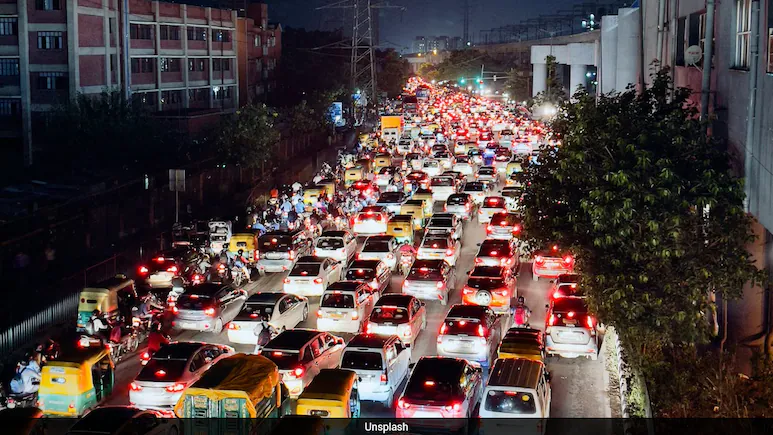
Delhi is set to restrict the entry of vehicles registered outside the capital that do not meet Bharat Stage VI (BS-VI) emission standards from November 1, 2026, as the government steps up measures to tackle winter air pollution. The restriction, scheduled to remain in force until January 31, 2027, could affect thousands of people travelling daily from neighbouring cities for work, business and other essential activities.
The policy is part of Delhi's winter pollution-control plan and specifically targets non-compliant vehicles registered outside the city. Motorists travelling from Gurugram, Faridabad, Noida, Greater Noida and Ghaziabad will need to check their vehicles' emission categories before entering the capital.
Transport department estimates indicate that more than 10 lakh vehicles across these neighbouring areas fall below BS-VI standards. However, not every vehicle included in these figures will necessarily be covered by the entry restriction.
More Than 10 Lakh Vehicles Fall Below BS-VI Standards
The potential scale of the restriction is particularly evident across the National Capital Region (NCR), where many residents regularly travel between cities for employment and commercial activities.
In Gurugram and Faridabad, nearly two lakh vehicles do not meet BS-VI emission standards. Around 70 per cent of these vehicles belong to the BS-III and BS-IV categories. The two districts also have approximately 50,000 commercial vehicles that fall below the required standard.
The numbers are higher in neighbouring Uttar Pradesh. Noida and Greater Noida together account for more than four lakh vehicles that do not comply with BS-VI norms, with BS-IV vehicles making up over half of the total, predominantly petrol cars.
Ghaziabad has approximately four lakh vehicles below the same emission standard, according to official estimates.
These figures highlight the potential disruption for commuters who depend on private vehicles to reach workplaces in Delhi. People who regularly cross city borders may need to reconsider their travel arrangements during the restriction period.
Which Vehicles Will Be Exempt?
The restriction does not apply to every vehicle registered outside Delhi. Vehicles that meet BS-VI emission standards will remain eligible to enter the capital under this particular measure.
Electric vehicles and CNG-powered vehicles are also exempt. Certain emergency and essential-service vehicles, including ambulances and fire tenders, are excluded from the restriction.
The provision specifically targets non-BS-VI vehicles registered outside Delhi. Delhi-registered vehicles are not covered by this particular entry ban, although other applicable pollution-control requirements and vehicle-age restrictions may continue to apply.
Motorists should distinguish the emission-standard requirement from other pollution-control rules. Compliance with one requirement does not automatically exempt a vehicle from separate regulations.
AI Cameras to Monitor Delhi's Borders
Authorities are preparing to strengthen enforcement at entry points connecting Delhi with neighbouring cities. Artificial intelligence-enabled Automatic Number Plate Recognition (ANPR) cameras will scan vehicle registration plates at border checkpoints and selected road lanes to help identify vehicles requiring further checks.
Physical enforcement arrangements are also being strengthened, particularly along routes used by commuters travelling from Noida, Gurugram and Ghaziabad.
The system is intended to help officials identify vehicles that fall within the restricted category before they enter the capital. Its implementation will be especially relevant on busy routes used for daily office commutes.
Part of a Wider Winter Pollution-Control Strategy
The vehicle restriction forms part of a broader effort to reduce emissions during the months when Delhi frequently experiences deteriorating air quality.
The winter action plan also includes measures involving workplace attendance, parking, construction activity and pollution monitoring. The government has promoted public transport, including Metro services and electric buses, alongside carpooling and improved last-mile connectivity.
A separate requirement concerning valid Pollution Under Control (PUC) certificates also forms part of the wider pollution-control measures. The PUC requirement and the vehicle-entry restriction are distinct rules, with different compliance conditions.
For commuters, the immediate priority will be determining whether their vehicles meet the applicable requirements before November 1. Those whose vehicles fall under the restriction may need to use public transport, arrange shared travel or make alternative commuting plans until the entry restrictions end on January 31, 2027.