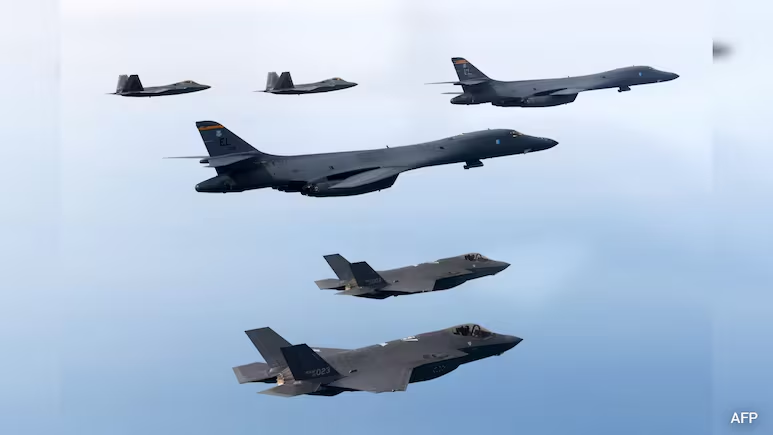
A shipping error involving sensitive components of the US F-35 stealth fighter has triggered serious national security concerns in Washington, after a warning email reportedly went unnoticed during an international delivery. The incident involved aircraft parts containing radar-absorbing material that were mistakenly routed through Hong Kong, raising questions about safeguards designed to prevent American military technology from reaching potential adversaries.
The episode has drawn attention to weaknesses in defence logistics, where a seemingly routine administrative oversight can create consequences extending far beyond a delayed shipment.
How the F-35 Components Reached Hong Kong
The components were reportedly being transported from Australia to the United States in late May for potential repair or disposal. The shipment included an F-35 cockpit canopy and a weapons-bay door featuring radar-absorbing material, an important element of the aircraft's stealth capabilities.
The planned route was understood to involve South Korea and Taiwan, both defence partners of the United States, before the shipment reached San Francisco. However, a delay in the shipment's departure from Australia led to a change in its routing. The parts were subsequently sent through Hong Kong in an effort to accelerate delivery.
That decision became a major concern because the shipment was subject to strict American export controls governing sensitive military equipment and technology.
The Email That May Have Changed Everything
DSV A/S, a freight forwarding company handling logistics on behalf of F-35 manufacturer Lockheed Martin, reportedly sent United Parcel Service (UPS) a warning about restrictions on the shipment's permitted transit countries.
The message highlighted requirements under the International Traffic in Arms Regulations, commonly known as ITAR. These US rules regulate the export and transfer of defence-related equipment, technical information and other controlled items.
However, the warning was apparently missed by the UPS employee handling the shipment. One explanation offered for the oversight was that the message may have arrived through a different information system from the one the employee normally used.
The precise sequence of events has raised concerns about whether communication failures between logistics providers contributed to the security lapse.
Why the F-35 Technology Matters
The F-35 Lightning II, developed by Lockheed Martin, is a fifth-generation multirole combat aircraft used by the United States and numerous international partners. Its stealth design is intended to reduce the likelihood of detection by enemy radar, giving it a significant operational advantage.
Radar-absorbing materials are among the technologies that contribute to that capability. Access to physical components could potentially help a foreign intelligence or research organisation study their construction and assess ways to counter the aircraft's advantages.
Diana Maurer, who oversees F-35 support reviews at the US Government Accountability Office, described the reported development as a significant concern. The possibility that Chinese specialists could examine the components has intensified scrutiny of the incident.
However, the reported transfer does not, by itself, establish how much sensitive information China obtained or whether the incident has resulted in any measurable reduction in the aircraft's operational effectiveness.
Pentagon Investigation Puts Defence Supply Chains Under Scrutiny
The incident has prompted investigations involving the Pentagon and the US State Department. American lawmakers have also called for closer examination of the international supply networks used to transport military equipment.
Lockheed Martin previously said it was working with its logistics partners to strengthen oversight and introduce preventive measures. The company has also emphasised that its transportation decisions are made in coordination with relevant parties rather than unilaterally.
The case highlights a broader challenge for modern defence programmes: maintaining strict security controls across complicated international supply chains involving manufacturers, freight forwarders and delivery companies.
For Washington, the investigation will need to establish how the routing decision was made, why the warning was missed and what safeguards can prevent similar incidents. The findings could influence how sensitive military components are tracked, transported and monitored in the future.
Ultimately, the episode demonstrates that protecting advanced defence technology requires more than sophisticated engineering. Reliable communication, clear responsibility and effective oversight throughout the delivery process are equally important.