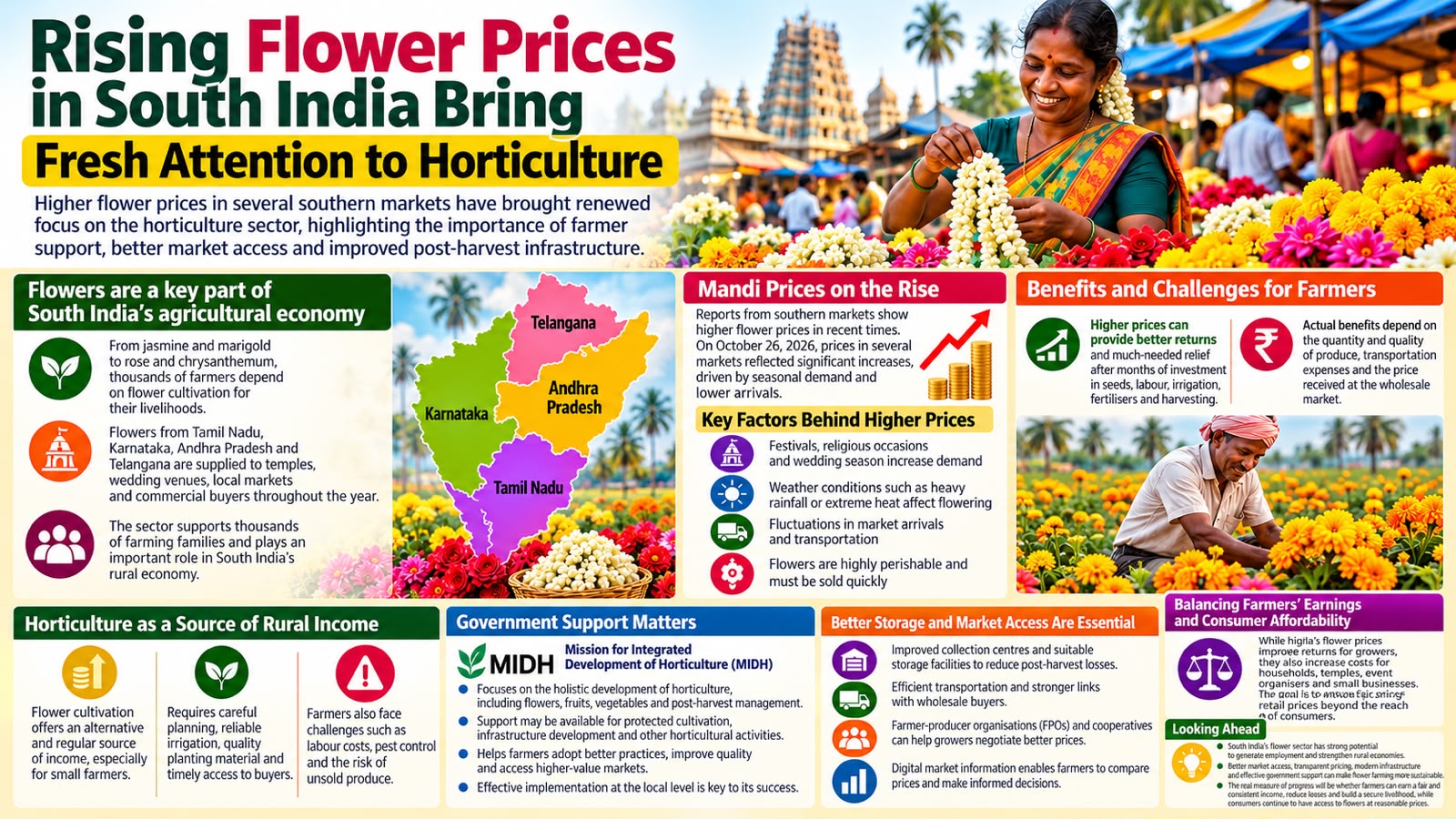
Higher flower prices in several southern markets have brought renewed focus on the horticulture sector, highlighting the importance of farmer support, better market access and improved post-harvest infrastructure.
Flowers are an important part of South India's agricultural economy. From jasmine and marigold to rose and chrysanthemum, thousands of farmers depend on flower cultivation for their livelihoods. The flowers grown in states such as Tamil Nadu, Karnataka, Andhra Pradesh and Telangana supply temples, wedding venues, local markets and commercial buyers throughout the year.
In recent times, reports of rising flower prices in southern markets have attracted attention among consumers and farmers alike. Seasonal demand, religious festivals, weddings, weather conditions and fluctuations in market arrivals can all influence the prices of fresh flowers. When supplies fall short of demand, prices can rise sharply within a short period.
For farmers, such price increases may offer an opportunity to earn better returns. However, the actual benefit depends on production costs, the quantity harvested, transportation expenses and the price received at the wholesale market.
Why Are Flower Prices Rising?
Unlike many other agricultural commodities, flowers are highly perishable. They must be harvested, transported and sold quickly, leaving farmers with limited time to find buyers or wait for more favourable prices.
During festivals, auspicious occasions and wedding seasons, demand for flowers often increases significantly. Jasmine, marigold and roses are particularly important for religious ceremonies, decorations and social functions. At the same time, heavy rainfall, extreme heat or other unfavourable weather conditions can affect flowering, reduce yields and disrupt supply.
The combination of increased demand and limited availability can lead to sudden price movements. These changes are often visible in wholesale markets before consumers experience higher prices at retail flower stalls.
Horticulture Offers an Important Source of Rural Income
Flower cultivation provides an alternative source of income for farmers, particularly those working on relatively small landholdings. Depending on the variety and local growing conditions, flowers can offer regular harvesting opportunities and access to specialised markets.
However, successful cultivation requires careful planning, reliable irrigation, quality planting material and timely access to buyers. Farmers must also manage labour costs, pest control and the risk of unsold produce.
This is where improvements in agricultural infrastructure and horticulture support become important. Better irrigation facilities, technical guidance, cold-chain infrastructure and access to organised markets can help farmers manage production more efficiently and reduce avoidable losses.
The Role of Government Support
Government-backed horticulture programmes have an important role in supporting farmers who want to improve productivity and diversify their crops.
The Mission for Integrated Development of Horticulture (MIDH) focuses on the holistic development of horticulture, including flowers, fruits, vegetables, planting material and post-harvest management. Depending on the applicable component and state-level implementation, assistance may be available for activities such as protected cultivation, infrastructure development and other horticultural improvements.
Such support can help farmers adopt better cultivation practices, improve the quality of their produce and explore higher-value markets. Equally important is ensuring that eligible farmers are aware of the schemes and can access the assistance without unnecessary procedural difficulties.
The effectiveness of these initiatives ultimately depends on implementation at the local level. Timely guidance, transparent procedures and adequate infrastructure can make a meaningful difference to farming households.
Better Storage and Market Access Are Essential
One of the biggest challenges in the flower trade is the loss of produce after harvesting. Unlike grains, fresh flowers cannot generally be stored for long periods without appropriate facilities. Delays in transportation or a sudden fall in demand can therefore result in significant losses.
Improved collection centres, suitable storage facilities, efficient transportation and stronger links with wholesale buyers could help address this problem.
Farmer-producer organisations and cooperatives can also help growers combine their produce, reduce certain marketing costs and negotiate with larger buyers. Digital market information can further enable farmers to compare prices and make better-informed selling decisions.
These improvements would benefit not only cultivators but also traders, florists and consumers by making the supply chain more efficient.
Balancing Farmers' Earnings with Consumer Affordability
While higher flower prices can improve returns for growers, they also increase costs for households, temples, event organisers and small businesses that depend on flowers.
The objective should therefore be to create a system in which farmers receive fair prices without unnecessary supply-chain costs pushing retail prices beyond the reach of ordinary consumers.
Better production planning, reduced post-harvest losses and improved distribution can help achieve this balance. More reliable market information can also reduce uncertainty for both growers and buyers.
Looking Ahead
The recent discussion around rising flower prices in South India highlights the growing importance of horticulture as a source of rural employment and agricultural income.
Higher prices can provide temporary relief to farmers, but lasting progress requires more than favourable market conditions. Access to modern cultivation practices, effective government support, better storage and dependable market connections will be essential to making flower farming more sustainable.
India's horticulture sector has considerable potential to generate employment and strengthen rural economies. The real measure of progress will be whether farmers can earn more consistently, reduce losses and build a secure livelihood, while consumers continue to have access to flowers at reasonable prices.
A stronger horticulture sector is ultimately one in which market opportunities are supported by practical infrastructure, effective implementation and a fairer share of value for the farmers who grow the flowers.
By -Professior Nawaz Ahmad Khan
ND University, Ayodhya, Uttar Pradesh