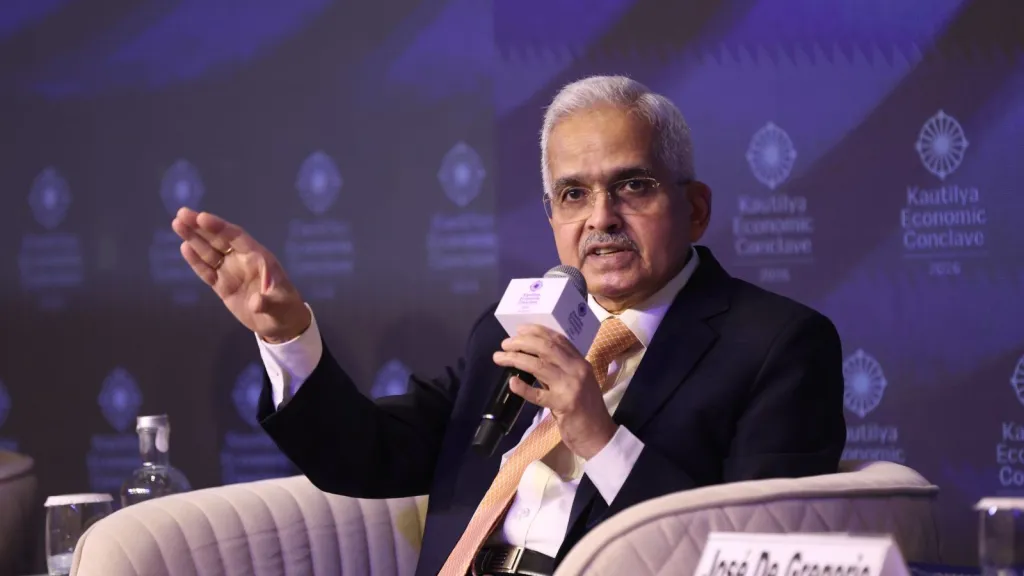
India must strengthen domestic production, reduce dependence on imports and continue implementing structural reforms to protect its economy from global uncertainty, Shaktikanta Das, Principal Secretary-2 to the Prime Minister, said at the Kautilya Economic Conclave. He also highlighted the country’s recent economic performance, stating that India is approaching the 8% growth mark as it works towards its long-term development ambitions.
Speaking during the second day of the three-day conclave, organised by the Ministry of Finance and the Institute of Economic Growth, Das stressed the importance of developing domestic capabilities in strategically important sectors. Energy and fertilisers were among the areas he identified where reducing reliance on foreign supplies could strengthen economic resilience.
Domestic Capacity a Priority for Economic Security
Das emphasised that India needs to build long-term production capabilities in sectors where imports remain significant. Developing domestic expertise and manufacturing capacity could help the country respond more effectively to international disruptions and supply-chain pressures.
However, he clarified that self-reliance should not be interpreted as economic isolation. India's approach to Atmanirbharta, or self-reliance, should involve strengthening domestic industries while remaining connected to international markets. Expanding trade partnerships and pursuing free trade agreements would remain important parts of this strategy.
The approach reflects the challenge facing major economies as geopolitical tensions, changing trade conditions and external shocks create uncertainty for businesses and governments. For India, improving domestic supply capabilities while maintaining international trade links could help support more stable economic expansion.
GDP Performance Supports Growth Ambitions
Das pointed to India's recent gross domestic product performance as evidence of its economic momentum. Real GDP grew by 7.8% in the first quarter of the 2026-27 financial year, covering April to June 2026.
He also cited growth of slightly more than 8% across the four-quarter period from July-September 2025 to April-June 2026, highlighting the strength of economic activity over that broader timeframe.
The figures underpin his assessment that India is moving closer to sustained growth at around 8%. Achieving that pace over the longer term, however, will require continued policy improvements, stronger productive capacity and measures that preserve macroeconomic stability.
Das described India's ambition to become a developed nation by 2047 as increasingly attainable, while indicating that economic progress requires continuous efforts rather than a fixed endpoint for reform.
Reforms Help Build Economic Resilience
According to Das, India's ability to withstand economic shocks reflects reforms implemented over the past decade. These measures have helped create safeguards intended to absorb disruptions and support recovery when conditions deteriorate.
Among the important changes he highlighted were flexible inflation targeting, the introduction of the Goods and Services Tax, fiscal discipline, the expansion of digital payments and reforms in the banking sector.
He also pointed to the country's external economic position as a source of support. Export diversification, free trade agreements, a sustained surplus in services trade and steady remittance inflows have contributed to resilience in the external sector.
Maintaining fiscal, monetary and broader financial stability will remain important as India navigates an unpredictable international environment.
AI and Financial Markets Key to Future Expansion
Looking ahead, Das called for India to make effective use of artificial intelligence to sustain economic growth. He identified domestic AI capabilities, indigenous foundation models, high-performance computing infrastructure, semiconductor development and a strong innovation ecosystem as important priorities.
He also highlighted the need to deepen India's financial system to support its growing economic requirements. Stronger corporate bond markets, greater participation from pension and insurance funds, improved municipal financing and innovative infrastructure funding mechanisms could help mobilise long-term investment.
Das stressed the importance of patient capital, which can support projects that require substantial investment and take longer to generate returns.
India's next phase of development will therefore depend on more than headline GDP growth. Building domestic industrial strength, maintaining economic stability, advancing technology and expanding access to long-term finance will all be important to sustaining momentum towards the country's 2047 development goal.