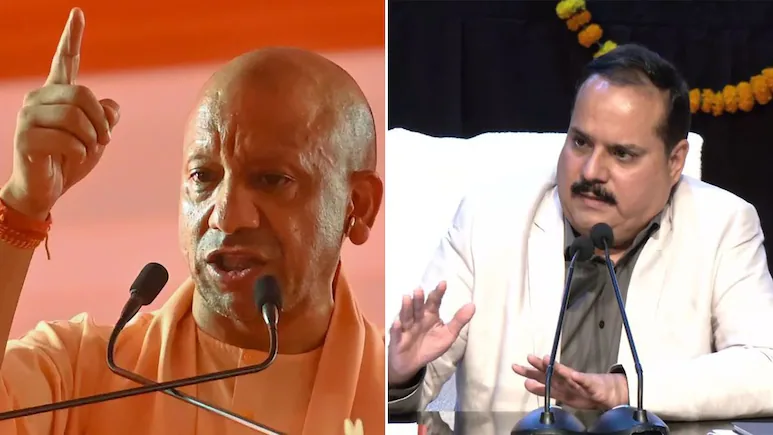
Uttar Pradesh Chief Minister Yogi Adityanath’s claim that 1.27 crore Hindu voters are missing from the state’s electoral rolls has triggered a political debate ahead of the 2027 Assembly elections. Chief Electoral Officer Navdeep Rinwa has responded by clarifying that the Election Commission does not maintain voter records based on religion or caste, making it impossible for the poll body to produce an official religion-wise analysis of the electoral rolls.
The controversy centres on discrepancies raised after the Special Intensive Revision (SIR) of electoral rolls and the question of whether eligible citizens have been left out of the voter list. Adityanath has questioned the apparent gaps, while election officials have stressed that the figures cited in political arguments are not based on religion-specific data maintained by the Commission.
Yogi Adityanath Raises Concerns Over Missing Voters
Adityanath has claimed that approximately 1.27 crore Hindu voters whose names appeared in Uttar Pradesh’s panchayat election rolls were absent from the Election Commission’s electoral rolls.
He also cited figures involving around 66 lakh voters allegedly missing from the Assembly rolls, including approximately 55 lakh Hindu beneficiaries of government welfare schemes and around 4.5 lakh people aged between 18 and 19.
The Chief Minister said the state government had submitted a memorandum to the Election Commission seeking clarification regarding the discrepancies. He also maintained that the Commission was an independent constitutional authority responsible for conducting elections and maintaining electoral rolls.
His statements have intensified the debate over the impact of the voter-list revision and whether eligible voters are adequately represented in the official records.
However, the figures cited by the Chief Minister remain claims that require examination against the underlying electoral data. The Commission’s database does not classify voters by religion, meaning the specific religious breakdown cannot be verified through its official records alone.
UP Chief Electoral Officer Explains What Voter Records Contain
Responding to the controversy, Rinwa said the Election Commission’s database contains basic information about voters, including their names, age or date of birth, gender, house number and details about relatives.
It does not include religion or caste.
The Chief Electoral Officer explained that the absence of such information prevents the Commission from officially analysing electoral rolls according to religious or caste identities.
He added that independent organisations, media outlets and other analysts could attempt to categorise names using publicly available electoral-roll documents and software. However, such assessments would be independent exercises rather than official findings by the Election Department.
Rinwa also clarified that a person being absent from the current electoral roll does not necessarily mean that their name was previously registered and subsequently deleted.
The distinction is important because the overall number of people not listed as voters can include eligible adults who have never registered, alongside those whose earlier entries may have been removed or require correction.
Draft Electoral Roll Lists 13.58 Crore Voters
The draft electoral roll for Uttar Pradesh, published on November 17 ahead of the 2027 Assembly elections, contains 13,58,68,905 voters.
According to the Chief Electoral Officer, the list includes 7,38,58,510 men, 6,20,06,353 women and 4,042 voters classified as third gender. It also contains 11,83,352 voters aged between 18 and 19.
The draft list represents a net increase of 18,84,113 voters compared with the final electoral roll published on April 10, 2026, following the SIR exercise.
Rinwa estimated that Uttar Pradesh had approximately 16.16 crore residents aged 18 and above in 2026. Comparing that projection with the draft electoral roll, he said an estimated 2.58 crore adults were not currently included.
He cautioned, however, that this figure should not be interpreted as the number of voters whose names were deleted during the revision. The gap also includes eligible citizens who may never have enrolled.
Voters Get Time to Check and Correct Their Names
The Election Department has opened a claims and objections period from November 17 to December 16, giving eligible citizens an opportunity to review their registration status and seek corrections.
Voters can use Form 6 to apply for inclusion in the electoral roll, Form 7 to raise objections concerning entries or request deletions where applicable, and Form 8 to seek corrections or other permitted changes.
The final electoral roll is scheduled to be published on January 4, 2027, after the claims and objections process concludes.
Special camps are also scheduled at polling stations across Uttar Pradesh on November 21, 22, 28 and 29, from 10 am to 4 pm, to help citizens with enrolment and corrections.
With the Assembly elections approaching, the dispute over missing voters is likely to remain politically significant. The central issue now is whether eligible citizens have been left out of the rolls and whether the ongoing revision process can resolve discrepancies before the final list is published.